Films
About this video It Takes a Village
UGANDA: After experiencing a mental health crisis of her own, Robinah Alambuya founded TRIUMPH Uganda to help others with psychosocial disabilities in her community. *Audio descriptions for blind and low-vision audiences.
Filmmaker: Esther Suubi
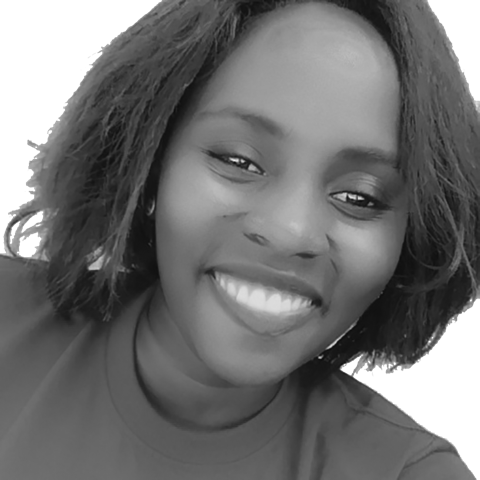
Esther Suubi is an advocate for young girls and women's voices and a peer educator at Triumph Mental Health Support. Read more about Esther Suubi
Transcript for It Takes a Village
Video opens with the Basoga Tribe from Uganda performing a cultural dance. They are wearing black T-shirts and long, orange scarves tied around their waists. Video cuts to TRIUMPH’s Uganda’s red and blue logo. Melancholic synth music starts to play.
“I needed a platform where I can use my story, my lived experience to build hope in other families who experienced mental health issues like what I’ve gone through,” says Robinah Alambuya, TRIUMPH’s Uganda’s executive director, “and displaying that it is possible to have mental health issue, yet you continue with your life, making a meaningful contribution to society.” Robinah is wearing a pink and brown shirt with star designs. Video cuts to a younger Robinah leading a meeting with other TRIUMPH members. Then it transitions to a photo of Robinah wearing a bright blue shirt and white headscarf. She is holding a sign that says, “#Stop Sexual Abuse!”.
“Our first meetings were in 2008,” she says. Video cuts to a photo of two TRIUMPH members holding a sign that says, “Why not affirmative action also in elections.”
“It was a family initiative to begin with. We began calling people on a monthly basis to come home and just to be…We take some tea together,” says Robinah. Video shows a series of photos of TRIUMPH member gatherings. “We would call members who have experienced mental health issues and they would come around – those who chose to come – they would come around and we just share some tea together, and we talk about these issues and our experiences. Then we’ll share information. We’ll do encourage one another. It was like a peer-support group.”
Video cuts to Robinah standing outside and talking with government officials. In the next shot, a group of young Ugandan women stands in a circle outside. “We come, and we share freely and openly that this is part of life and these people are part of our community, which we need to include them and make sure that they participate and actively get involved.”
Series of photos of TRIUMPH members and Robinah. “And also seeing the fruit from our lives, for us have stood out, and we began mentoring the younger people, so the younger people we’ve mentored especially the families can witness because, like children who have fallen out of school, some have come back to school,” says Robinah. “Children who had lost hope that maybe they would never make it in life, they have gone even up to university with the support that they get from the peer support that we give them – the information, the hope-building.”
Video shows a series of photos of young TRIUMPH members dancing and posing for the camera. “The impact of TRIUMPH and our work as prior TRIUMPH can be seen or witnessed by families. We have one of the younger ladies who is well-known – Esther Suubi, who was connected to me by the mother because I shared a lived experience,” says Robinah. “One of her years was really distracted by what she was experiencing.”
Video shows photos of Esther at various family and TRIUMPH events and also speaking to the camera as a spokesperson for TRIUMPH. “When she was connected to me, of course, I just kept on using my story and caused the heart to see light for the in the future, and then the training because we mediated on that time Disability Rights Fund had us to build the self-esteem of these younger women, adults and younger women with psychosocial disabilities,” says Robinah. “We were able to give trainings on building self-esteem, hope-building, and strengthening the peer support among the younger people.”
Robinah continues: “I’m so privileged to see that now she’s really serving in TRIUMPH. Happily, she’s now a peer educator, supporting others, and she’s even leading our Disability Justice Project as a fellow.” Video cuts to a photo of Esther holding a camera and then to a screenshot of an article Esther wrote for the Disability Justice Project. The headline is, “Teen Pregnancy During Covid: Triumph Uganda advocates for better access to sexual and reproductive health services for women and girls with disabilities.”
“I’m very proud, and I also feel good that I’ve added value in my lifetime,” says Robinah. “I’m adding value to other people’s lives.”
A black title card with black letters on a yellow background says, “Copyright – @2021. Triumph Uganda. All rights reserved.”
About this video Finding the Light
RWANDA: NOUSPR has a dream - a world in which all people with psychosocial disabilities are treated with the respect and dignity. *Audio descriptions for blind and low-vision audiences.
Filmmaker: Rose Umutesi
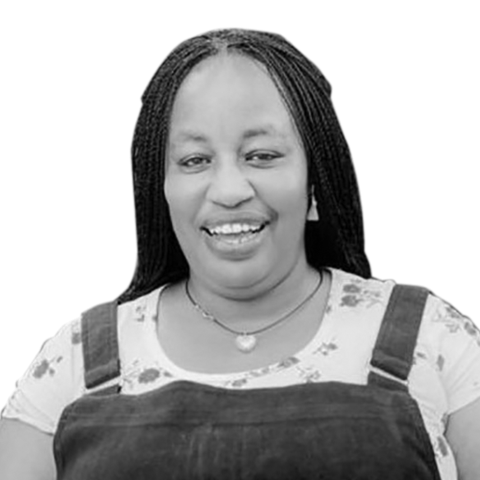
Rose Umutesi is chairperson of the National Organization of Users and Survivors of Psychiatry in Rwanda and co-founder and treasurer of its umbrella organization, National Union of Disabilities Organizations of Rwanda. Read more about Rose Umutesi
Transcript for Finding the Light
Video starts with gentle guitar music and a photo of NOUSPR members standing in a circle outside. A Rwandan man wearing a mask appears to be talking with them. The people in the circle have bundles of supplies at their feet. The next photo is of NOUSPR members sitting in a room in white chairs, masked, and the third photo shows NOUSPR members sitting on the grass with more bundles of supplies in front of them.
The next shot is of a NOUSPR billboard. It says “NOUSPR-UBUMUNTO: National Organisation of Users and Survivors of Psychiatry in Rwanda” and includes contact information. It also shows the NOUSPR logo – a drawn face – and tagline: “seeking dignity.”
The video cuts to an interview with Mariza Munah, NOUSPR’s advocacy officer. She is sitting on a large, brownish beige couch and wearing a brown and orange dress. Her short, dark hair is pulled back in a scarf. “I believe that mental health issue in our country is one of the neglected disabilities,” she says. The video cuts to Mariza in the office. She is sitting behind a computer, with a NOUSPR poster behind her. “So I think direct advocacy can work here in our country,” she says. “If we really meet those people who can really bring change like the politicians, the authorities, the police, the Ministry of Health, all those organizations that can really bring change.”
The video cuts to Mariza walking down a dusty street. “With that, people with mental health issues can get help,” she says. The video cuts back to Mariza in the interview on the couch. “I have been working with NOUSPR for a long time now,” she says. Video shows a photo of NOUSPR members standing outside again, with bundles of supplies at their feet. Video cuts to a closeup shot of four NOUSPR members talking in a room. There are two men and two women, and two of them are pointing at something in the corner. Cut to a headline from an online news publication, Rwanda Focus (Kigali), that says “Rwanda: Organization Helps Mental Health Patients to be Productive.” The beginning of the article says, “The National Organization of Users and Survivors of Psychiatry (NOUSPR), which advocates for people with current or past psychosocial problems, has set up an initiative to group its members according to their health situation to form cooperatives so that they can earn a living. Seated in a room making the baskets, trays, mats, others on tailoring machines, a group of people who have experienced or are experiencing mental health problems are being supervised by chairwoman Shemsha Murekatete.”
Video returns to Mariza on the couch. “In our culture, we don’t believe that there is such a thing like depression, like anxiety,” she says. Video cuts to three NOUSPR members in white coats (like the kind doctors would wear) with the NOUSPR logo. “They believe that you just have to face whatever comes your way and still be strong and still be normal,” says Mariza. Video cuts to a photo of dozens of NOUSPR members sitting in front of a NOUSPR banner that says, “Focus on Suicide Prevention.”
“Now that people are realizing that this is an issue, it’s a very big problem,” Mariza says, “especially with what our country went through, the genocide and the war.” Video cuts to an old photo from Rwanda. Military vehicles drive down a dusty road while families with bundles on their backs walk beside them. Cut to a picture of a woman in a blue shirt. She has braids and is wearing glasses. She is seated and looking at a wall of pictures of people who died during the Rwandan genocide. Video cuts to a screenshot of an academic study with the headline “Rwanda – lasting imprints of genocide: trauma, mental health and psychosocial conditions in survivors, former prisoners, and their children.” The academic study’s background says, “The 1994 genocide of the Tutsi in Rwanda left about one million people dead in a period of only three months. The present study aimed to examine the level of trauma exposure, psychopathology, and risk factors for posttraumatic disorder (PTSD) in survivors and former prisoners accused of participation in the genocide as well as their respective descendants.”
“I think it’s going to be very, very difficult to make people who have been understanding this thing in the wrong way for a very long period of time.” Video cuts to Mariza walking down a street. “To make them now see how things really are,” says Mariza. Video cuts to a photo of a purple banner that says, “The light will eventually overcome the darkness of genocide.”
“I think it’s not easy, but it’s possible that people can change their mindset,” says Mariza.
Transition to a title card with words highlighted in yellow on a black screen that says, “Copyright – @2021 NOUSPR. All rights reserved.”
About this video Disability and HIV
UGANDA: MADIPHA is advocating for a person-centered, disability-inclusive response to HIV in Uganda. *Audio descriptions for blind and low-vision audiences.
Filmmaker: Nissy Namuyomba
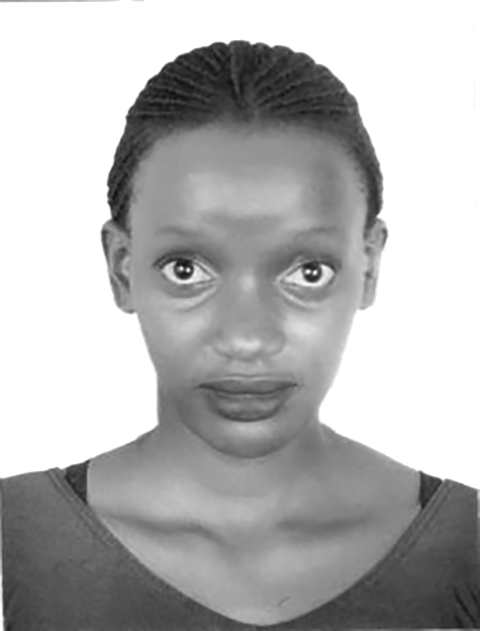
Nissy Namuyomba is an administrative assistant at the Masaka Association of Persons with Disabilities Living with HIV/AIDs and a volunteer with the Masaka Association of Persons with Cerebral Palsy in Uganda. Read more about Nissy Namuyomba
Transcript for Disability and HIV
Video starts with soft guitar music with moody vocals and a photo of Richard Musisi, the executive director of MADIPHA. Richard smiles into the camera and is wearing a blue MADIPHA polo shirt. “Musisi Richard is my name,” he says. “I am the executive director of MADIPHA, of Masaka Association of Persons with Disabilities Who are Living with HIV and AIDS.” Video cuts to a photo of Richard gesturing to a small group of people outside. Cut to another photo of Richard posing with a person in a wheelchair. They are at a marathon event. People appear to be warming up in the background. Richard continues, “It started in 2009.”
Video cuts to a photo of a large group of MADIPHA members holding up a white MADIPHA banner. A second photo shows MADIPHA members gathered inside, listening to someone speak. A MADIPHA banner hangs across a long, side window.
Video cuts to an interview setup with Wanyana Cate, co-founder of MADIPHA. She has short, dark hair and is wearing a beige dress patterned with diamonds. “We started as five people, and we decided to start MADIPHA with the aim of showing people that there is a possibility that PWDs can get infected with HIV/AIDS and still live long lives,” she says.
Video cuts to a photo of a large group of people outside with MADIPHA banner behind them. A second photo shows an audience from behind listening to someone speak at the front of the room. A third photo shows MADIPHA members sitting on benches. One person is standing up. “As MADIPHA, so far in those 10 years we’ve done quite a lot of work,” says Richard. Video cuts to people with disabilities gathering outside at an annual forum for World AIDS Day and International Day of Persons with Disabilities. Several people are holding crutches and talking in a circle. Video cuts to a different scene at the forum – a man in a wheelchair and two government officials next to him, with people gathered at tables behind them. “One, sensitizing and mobilizing PWDs to seek for HIV and AIDS services within their nearby local health facilities,” says Richard. “We have also supported them to live positively through those peer-supported groups they are organized in.”
Video shows more photos. The first is a group of MADIPHA members looking at a whiteboard with notes written on it. The words “Masaka Association of Persons with Disabilities Who are Living with HIV and AIDS” are at the top of the whiteboard. A boy in a wheelchair reaches for something on the floor. In the second photo, a man is sitting at a table, holding a piece of bread and laughing. A woman in a purple dress sits next to him.
The video cuts to a photo of a man walking outside and carrying a large, green thermos. He is wearing a red, checked cap and a sports coat with a MADIPHA polo shirt underneath. He is smiling broadly. The video cuts to another photo of MADIPHA members posing for the camera outside a building. “We have also done a lot of work around advocacy to ensure that the rights for PWDs who are with living with HIV and AIDS are respected, especially at the service delivery centers but also even the policymakers themselves to ensure that people with disabilities can access those services without any form of discrimination,” says Richard. Brief transition to Richard and other people gathered at the Annual Forum for World AIDS Day and International Day of Persons with Disabilities. Video cuts to a photo of a boy in a wheelchair speaking into a microphone he’s holding. A second photo shows an older woman sitting next to a young girl. They are peeling the eggs they’re about to eat. A third photo shows a woman in a light pink and grey headscarf smiling next to a window.
“We try to work with other stakeholders, the National Union for People with Disabilities, the National HIV and AIDS service organizations,” says Richard. Video cuts to a photo of MADIPHA members listening to a woman speak at the front of the room. A second photo shows MADIPHA members listening to a man speak at the front of the aforementioned room. A third photo shows a woman in a white suit smiling at the camera.
Video cuts to a photo of a rural village. “In the past 10 years since MADIPHA was established PWDs have been motivated to live longer and have gained more self-esteem,” says Wanyana. Video shows a man wearing a checked shirt looking contemplative. Light shines on his face through a side window. A second photo shows a woman holding a baby. A third photo shows people gathered around tables, eating.
“They have been given startup capital to enable them to run small businesses from their homes depending on their abilities and knowledge and understand that they have to work hard in order to sustain their lives,” says Wanyana. A woman in a pink, knit cap and yellow T-shirt unlocks a cage. In a second shot, she bends down and tends to her chickens.
Video cuts to a young boy in a long-sleeved, light green T-shirt staring into the camera. A second photo shows three MADIPHA members – a man and two women – talking with a MADIPHA banner behind them. One of the women hands the man what looks like a certificate. A third video shows Richard and other MADIPHA members in MADIPHA polo shirts, posing for the camera outside. The video then cuts to a photo of Richard standing next to a woman with red hair and a multicolored pink scarf. They’re both holding microphones. “Because of the need of our work countrywide we are trying to change our registration status to say that we can fit within the national status. Soon will be called something like Association of Persons with Disabilities Who are Living with HIV and AIDS Uganda,” says Richard.
Video ends on soft trumpet music and a series of photos of MADIPHA members. The first is of a woman signing, and the second is a closeup of a woman with a white and pink headscarf, looking contemplative. A third photo is another gathering of MADIPHA members, with Richard talking into a microphone. The last photo is a closer shot of Richard talking into a microphone. At the end of the video, a black title card comes up that says, “Copyright @2021 MADIPHA. All rights reserved.
About this video Cara Belajar yang Berbeda
Penyandang Autisme di Indonesia Menempuh Jalan Sendiri Menuju Pendidikan dan Pekerjaan Kesempatan kerja terbatas bagi penyandang autisme di Indonesia. Tantangan muncul karena perbedaan komunikasi antara penyandang neurodiversitas dan neurotipikal – dan karena kurangnya penerimaan
Filmmaker: Naufal Asy-Syaddad
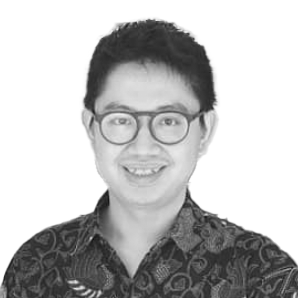
Naufal Asy-Syaddad is a disability rights activist with autism and chairperson of Yogasmara Foundation's youth group. Read more about Naufal Asy-Syaddad
Transcript for Cara Belajar yang Berbeda
Video dimulai dengan musik piano lembut dan layar animasi hitam, merah, putih, dan biru. Teks merah pada layar biru muda bertuliskan, “Naufal Asy-Syaddad.” Di bawahnya, teks putih bertuliskan, “DJP fellow from Indonesia.” Sulih suara Naufal Asy-Syaddad mengatakan, “Halo teman-teman. Perkenalkan, nama saya Naufal Asy Syaddad, DJP fellow dari Indonesia.”
Dipotong ke layar animasi hitam, putih, dan merah melingkar. Teks putih pada layar biru laut mengatakan, “Tema video ini.” Suara Asy-Syaddad melanjutkan, “Saya akan mengangkat tema kendala dalam mendapatkan kesempatan kerja bagi penyandang autisme.”
Dipotong ke layar animasi hitam, merah, putih, dan biru. Teks putih pada layar biru bertuliskan, “Kendala dalam mendapatkan kesempatan kerja bagi penyandang autisme.” Sulih suara Asy-Syaddad berlanjut, “Sebagai penyandang disabilitas autisme, mereka masih banyak mengalami kesalahpahaman.”
Dipotong ke layar animasi hitam, putih, dan merah melingkar. Teks putih pada layar biru muda bertuliskan, “Narasumber dalam video ini.” Sulih suara Asy-Syaddad berlanjut, “Sehingga ketika mereka sudah dewasa dan tiba waktunya untuk mencari pekerjaan, hal ini memiliki kesulitan tersendiri.”
Dipotong ke layar animasi merah dan merah muda melingkar. Teks merah pada layar putih bertuliskan, “M Atarriq Husein / Musisi penyandang autisme.” Sulih suara Asy-Syaddad berlanjut, “Kita memiliki 2 orang narasumber, yaitu Husein dan Faisal.”
Dipotong ke layar animasi merah dan merah muda melingkar. Teks merah pada layar putih bertuliskan, “Muhammad Faisal Hakim / Pengusaha telur asin penyandang autisme.” Sulih suara Asy-Syaddad berlanjut, “Mereka akan menceritakan bagaimana upaya-upaya mereka dalam mendapatkan pekerjaan yang mereka inginkan.”
Dipotong ke pan shot M. Attariq Husein, seorang pria dan musisi Indonesia penyandang autisme, mengenakan kemeja merah dan berbicara dengan para siswa di ruang kelas musik. Di latar belakang, seorang anak laki-laki Indonesia mengenakan kacamata dan kemeja hitam memainkan keyboard. Seorang pria Indonesia yang mengenakan masker wajah biru, kacamata, dan kemeja bermotif mustard, memperhatikan siswa yang sedang bermain keyboard. Sebuah papan tulis dan dinding plum berada di belakang mereka. Di sebelah kanan, seorang pria Indonesia duduk di meja, mengenakan masker wajah putih dan kemeja bermotif hijau-merah.
Dipotong ke dengan Husein yang berbicara dengan seorang gadis muda Indonesia yang mengenakan jilbab putih. Pria Indonesia yang mengenakan masker wajah biru dan kemeja bermotif mustard bergabung dalam percakapan mereka. Di latar belakang, seorang anak laki-laki Indonesia duduk di tanah di sebelah kiri, dan anak laki-laki lain membuka pintu kelas.
Dipotong ke Husein, mengenakan kemeja hitam-merah dengan tulisan putih dan gambar orang di atasnya, duduk di sofa dua tempat duduk berwarna coklat di sebuah ruangan. Dinding krem berada di latar belakang. Asy-Syaddad, seorang pemuda Indonesia yang mengenakan kacamata, celana putih, dan kemeja hijau muda, bergabung dengan Husein di sofa. Asy-Syaddad berbicara ke kamera, “Saat ini saya sedang bersama Muhammad Atarriq Husein. Nah, dia ini adalah penyandang diasabilitas autisme yang lahir pada tanggal 26 Januari tahun 2000. Jadi usianya dia itu sudah 22 tahun. Nah, dia itu memiliki bakat di bidang musik.”
Dipotong ke Husein bernyanyi ke dalam mikrofon di ruang kelas musik. Sebuah papan tulis, dudukan mikrofon, amplifier, speaker, dan barang-barang kelas lainnya berada di latar belakang. Voiceover Asy-Syaddad berlanjut, “Dan dia itu telah memiliki banyak prestasi di bidang musik.”
Dipotong ke Husein dan Asy-Syaddad yang duduk di sofa dua tempat duduk berwarna coklat. Husein berbicara ke kamera, “Ada. pasti itu ya, kendalanya itu. Bukan hanya kuliah jurusan musik. Gue aja yang gak tahu… apa ya… kan di sekolahku kan nggak ada diajari not balok, semuanya itu dari otodidak. Semuanya itu dari otodidak, jadi benar-benar sesuai kemampuannya, dipelajari sendiri-sendiri itu. Kalau di perguruan tinggi yang asli itu, saya diceritain sama guru saya Pak Harsono, ‘Lu kuliah di situ gak bakal mampu.’” Musik piano yang lembut memudar.
Dipotong ke Husein yang sedang menabuh drum di atas drum set hitam di sudut ruang kelas musik, di depan dinding plum. Sebuah gitar bass, amplifier, dan speaker hitam berada di sebelah kanan. Seseorang bernyanyi dengan musik di luar kamera. Husein melanjutkan suaranya, “‘Gak bakal mampunya gimana, gak bakal mampu. Lu akan ditanyain rumus, ditanyain not balok, ditanyain tulisan, yang gambar musik,’ sebenarnya kita gak mempelajari itu. Kita gak ada fasilitasnya seperti itu, baik di sekolah.”
Dipotong ke Husein dan Asy-Syaddad yang duduk di sofa coklat. Husein berkata, “Umum kayak belajar itu, balik lagi ke SMP dulu, kalo belajar kuliahnya itu balik lagi ke situ, lha saya gak mau. Ada kendalanya juga sih, nah kan untuk kuliahnya sendiri kalau untuk sekarang ini ya, untuk sekarang ini ABK baru masuk yang tuna rungu, tuna netra, sama tuna daksa. Yang tidak peduli fisiknya seperti apa yang penting otak mereka [non-disabilitas]. Sementara mereka yang memiliki autisme dan disabilitas psikologis, meskipun memiliki tubuh [non-disabilitas], seperti Anda, mereka memiliki [kebutuhan belajar] yang berbeda.” Musik piano yang lembut diputar lagi.
Dipotong ke Husein yang sedang bermain drum di ruang kelas musik. Voiceover Husein berlanjut, “Ho di bawah (rata-rata) itu lho… itu yg sangat disayangkan sama, itu lho di Indonesia, itu aja sih. Ada kendalanya sendiri makanya saya nggak mau lagi berkuliah.”
Dipotong ke Husein dan Asy-Syaddad yang duduk di sofa coklat. Asy-Syaddad, menoleh ke Husein, bertanya “Berkuliah di bidang musik ya?” Husein menjawab, “Nggak. Ya karena. Ada kendala. Bukan kendala sih, lebih tepatnya saya nggak tahu apa itu not balok, itu saya gak tahu apa itu itu. Kan pasti ditanyain juga itu, yang namanya rumus, misalkan ke matematika itu juga ditanyain juga itu.”
Dipotong ke Muhammad Faisal Hakim, seorang pria dan pengusaha Indonesia yang menyandang autisme, berjongkok di lantai ubin, mengelap telur rebus dalam mangkuk plastik ungu dengan kain kuning. Dia mengenakan kemeja biru kehijauan, celemek merah-putih, sarung tangan plastik transparan di tangan kanannya, dan celana hitam. Mangkuk plastik biru muda berada di sebelah kiri mangkuk plastik ungu, dan bak plastik dengan penutup merah dan label putih, berisi cairan dan telur rebus, berada di sebelah kanan. Di latar belakang, sebuah telepon dan tas hitam tergeletak di atas sofa abu-abu dan coklat.
Dipotong ke Faisal, ibunya, seorang wanita Indonesia yang mengenakan jilbab merah dan kacamata, duduk di atas pelatih putih-coklat bersama Asy-Syaddad. Faisal duduk di sebelah kiri dan mengenakan kemeja berwarna biru kehijauan dengan desain dan teks bertuliskan, “Thailand,” di tengahnya. Ibu Faisal duduk di tengah dan Asy-Syaddad duduk di sebelah kanan, mengenakan kemeja hijau muda dan kacamata hitam. Asy-Syaddad berkata ke kamera, “Saat ini saya bersama dengan Budhe Sri Murni dan Faisal. Nah Faisal ini adalah penyandang autisme juga yang telah berusia 25 tahun ya?” Ibu Faisal berkata, “Enam.” Asy-Syaddad melanjutkan, “26 tahun ya, dia telah berusia 26 tahun, sekarang dia penyandang autisme yang berwirausaha.”
Dipotong ke Faisal yang berjongkok di lantai ubin. Ia selesai membersihkan telur rebus dalam mangkuk plastik ungu dengan kain kuning. Ia memindahkan telur itu ke mangkuk plastik biru muda di sebelah kiri. Suara ibu Faisal mengatakan, “Untuk kendalanya tetap banyak Naufal ya, di sana mungkin dia tidak bisa mengikuti instruksi dari kepala sekolahnya.”
Dipotong ke Faisal, ibunya, dan Asy-Syaddad duduk di dalam kamar. Ibu Faisal berbicara kepada Asy-Syaddad dengan gerakan tangan, “Harus bagaimana, harus setelah ini, ini, ini, ini, Faisal tidak punya ide, seperti itu.”
Dipotong ke memperbesar dari Faisal yang mengenakan sarung tangan plastik dan menggiling siung bawang putih menggunakan lesung dan alu di atas lantai berubin putih. Sebuah bak mandi putih berada di sebelah kiri, dan dua handuk dapur berwarna-warni tergeletak di sebelah kanan. Sulih suara ibu Faisal berlanjut, “Tetapi, saya sebagai orang tua ketika Faisal itu sebelum masuk ke sana pun kan saya sudah, apa ya.”
Dipotong ke Faisal, ibunya, dan Asy-Syaddad. Ibu Faisal berbicara dengan gerakan tangan, “Mengusahakan di rumah itu ada sesuatu yang harus dia kerjakan, yaitu membuat telur asin.”
Dipotong ke bidikan close-up Faisal yang terus membersihkan telur rebus. Dia menempatkan telur lain di mangkuk plastik biru muda.
Dipotong ke Faisal, ibunya, dan Asy-Syaddad. Ibu Faisal berbicara dengan gerakan tangan, “Pernah. Dulu pernah daftar ke bandeng juwono ya, itu atas saran Bu Ema, Emanuella,
kenal kan? Itu beliau di sana.”
Dipotong ke bidikan close-up Faisal yang selesai menggosok telur terakhir dan berbalik untuk mengambil lesung dan alu di sebelah kiri. Satu mangkuk beras dan satu mangkuk lagi berisi cabai merah, siung bawang putih, dan jempol jahe berada di antara lesung dan mangkuk plastik. Suara ibu Faisal berlanjut, “Dan Faisal juga sudah mengikuti tes-tes, tes psikologi, tes ini.”
Dipotong ke Faisal, Asy-Syaddad. Ibu Faisal berbicara dengan gerakan tangan, “Ternyata dari pihak sana pun ada beberapa yang terima, tetapi ada bagian tertentu yang tidak mau
terima.”
Dipotong ke Faisal menyendok cabe yang sudah dihancurkan keluar dari mortalnya dengan sendok sayur berwarna merah muda dan krem dan mencampurkannya ke dalam bak plastik di sebelah kiri. Bak itu berisi cairan, dan sebuah label putih juga ada di atasnya. Voiceover ibu Faisal berlanjut, “Karena apa, Faisal sudah anaknya yang sudah mulai tak teratur di misalnya untuk sholat. Kalo bekerja di erlina itu kan di bandeng juwono gak bisa kan untuk kamu sholat harus tepat waktu.”
Dipotong keFaisal yang dibungkus kantong plastik, direndam di dalam bak plastik dengan label putih. Sulih suara ibu Faisal berlanjut, “Padahal di sini sedang banyak yg membeli, seperti itu. Takutnya nanti Faisal itu di sana ketemu orang banyak, dengan suara-suara orang-orang yang keluar, yang mungkin Faisal belum… belum.”
Potongan ke Faisal, ibunya, dan Asy-Syaddad. Ibu Faisal berbicara dengan gerakan tangan, “Mudeng dan nanti terbawa akhirnya dari pihak sana, sepertinya Faisal bekerja di rumah saja. Alhamdulillah saya senang sekali.” Musik piano lembut memudar.
Dipotong ke Faisal duduk bersila di lantai, memegang karton plastik berisi telur yang sudah jadi. Sebuah label pada karton bertuliskan, “Mas Faizal,” dalam Bahasa Indonesia. Sebuah bak plastik dengan tutup merah berada di sebelah kanan. Pengisi suara Asy-Syaddad mengatakan, “Jadi, kesimpulannya adalah individu autisme mengalami kesulitan mendapatkan kesempatan kerja dikarenakan kondisi khusus mereka, yaitu perbedaan cara komunikasi dan sosialisasi.” Musik band dimainkan dan seseorang bernyanyi bersama di luar kamera.
Dipotong ke Husein yang sedang bermain drum di ruang kelas musik. Saat lagu berakhir, dia meletakkan stik drumnya. Pengisi suara Asy-Syaddad melanjutkan, “Serta kurangnya penerimaan masyarakat terhadap penyandang autisme.” Orang-orang bertepuk tangan dan bersorak dalam Bahasa Indonesia di luar kamera.
Fade ke teks hitam dengan garis tepi kuning pada layar hitam yang bertuliskan, “Copyright – @2022 Yogasmara Foundation. Semua hak cipta dilindungi undang-undang.”
Fade ke teks hitam dengan garis tepi kuning pada layar hitam yang bertuliskan, “Dibuat dengan dukungan dari Proyek Keadilan Disabilitas dan Disability Rights Fund.” Logo Disability Justice Project adalah huruf “D” besar berwarna kuning dengan tombol putar hitam di tengahnya untuk menandakan video storytelling, dan teks putih bertuliskan “Disability Justice Project” di kiri bawah. Logo Disability Rights Fund – kotak putih dengan teks hitam bertuliskan, “Disability Rights Fund” – berada di kanan bawah layar.