News
‘Evacuation Routes Are Meant for People Who Can Run’
Play audio version
As Climate Change and Conflict Affect Millions Across Pakistan, There’s a Growing Need For Inclusive Emergency Communication and Evacuation
January 22, 2026
Editor’s note: This is the fourth in our series on conflict and disability. As wars and political violence escalate across the Middle East, Africa, and Eastern Europe, we’re documenting how people with disabilities are being overlooked in humanitarian responses — and why inclusion is more urgent than ever.
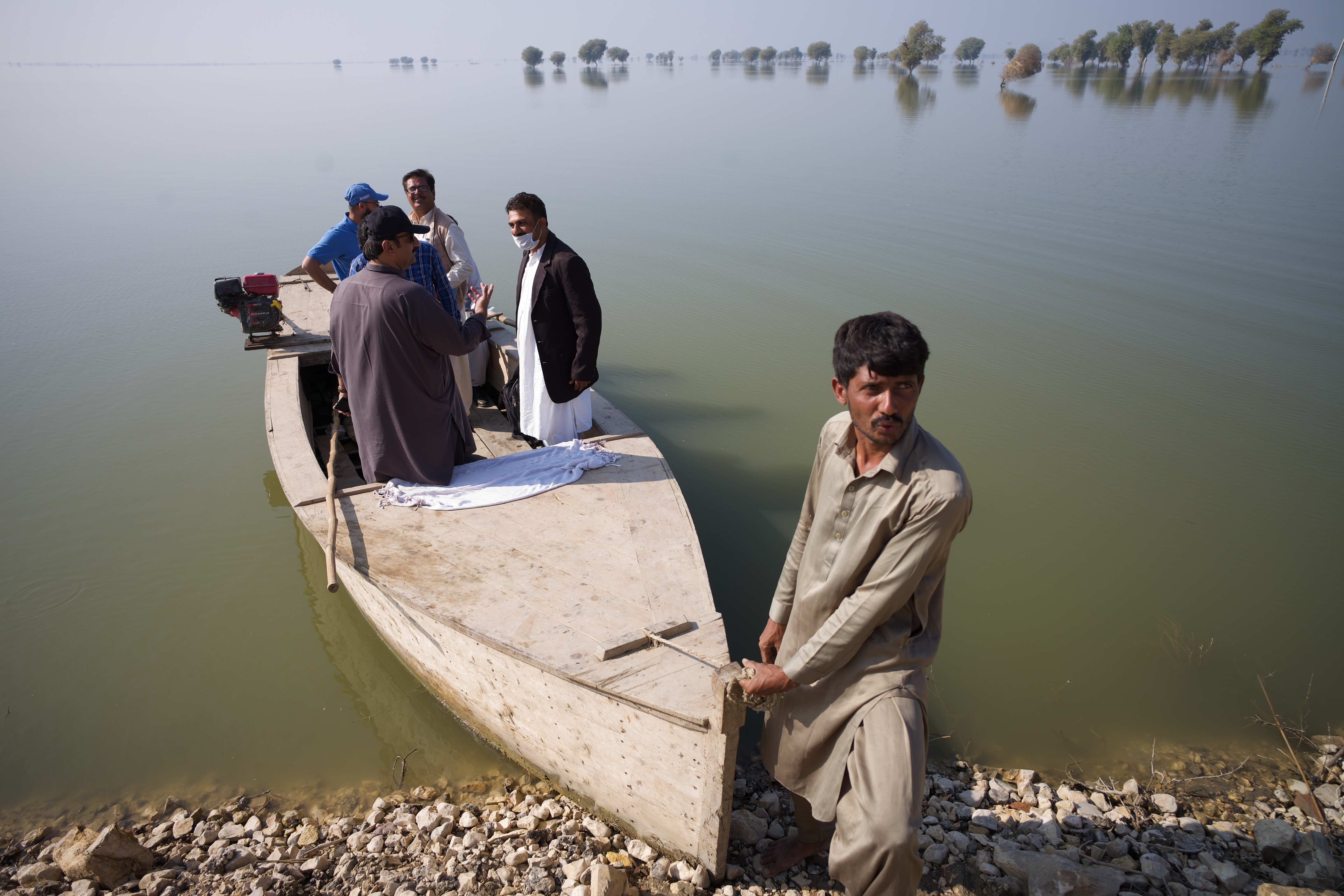
Between June and October 2022, intense monsoon rains and increased snowmelt caused catastrophic flooding across Pakistan. Roughly one-third of the country was underwater, killing 1,700 people and damaging more than two million homes. Those displaced by the floods stayed in camps with limited food supplies and poor sanitation, leading to outbreaks of waterborne diseases. Farms that rural families had managed for generations were destroyed, exacerbating existing food insecurity and poverty. (Pakistan ranks 106th out of 127 countries on the 2025 Global Hunger Index.)
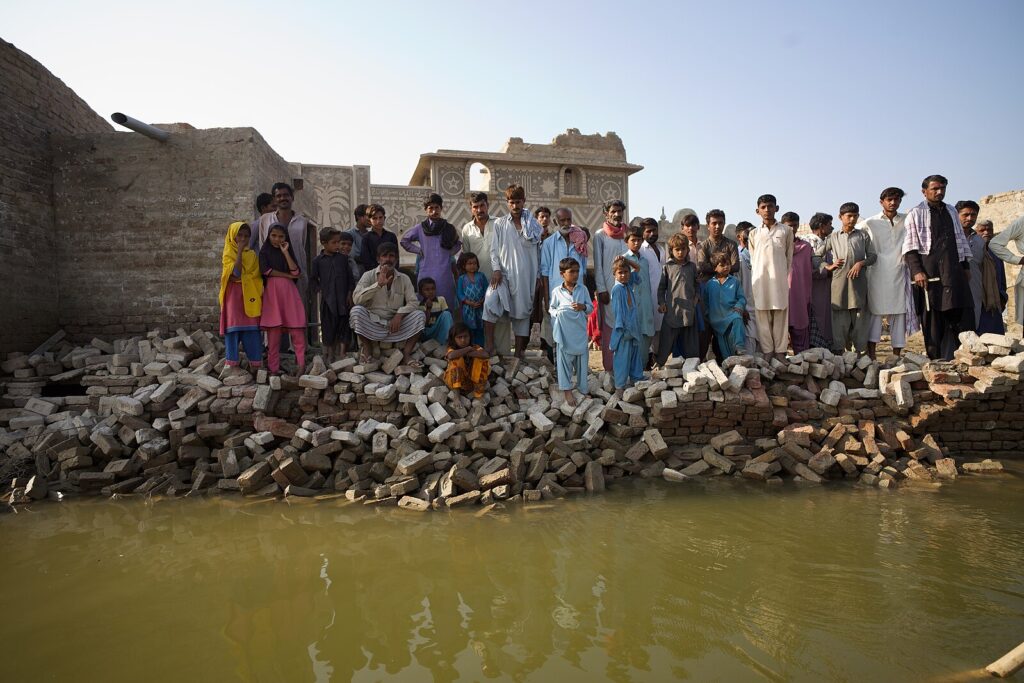
According to the World Food Programme, Pakistan is the eighth most vulnerable country to the effects of climate change. Overall, 33 million people were impacted by the 2022 floods in Pakistan. “The situation was even harder for people with disabilities, with countless coming forward about how shelters were inaccessible, and so were essential hygiene facilities,” says Kashaf Alvi, a Deaf author and policy advocate on disability and climate justice. “This made an already stressful crisis even more dangerous.”
Emergency Alerts that Don’t Reach Everyone
Pakistan’s deep political, regional, and ethnic divides, along with long-running separatist movements and armed militant groups, have also contributed to the country’s instability. In April 2023, the Pakistan government announced a nationwide offensive to eradicate militants after its most prominent extremist group, the Tehrik-e Taliban Pakistan, expanded south from its northwest base. This was the largest offensive since a similar 2014 military operation that displaced nearly 800,000 people.

A long history of territorial disputes with India has also impacted the country. In April, a deadly attack in Pahalgam, a town in Indian-administered Kashmir to the northeast, escalated the conflict between the two countries.
For Pakistanis with disabilities, many are left out of the loop if communication systems during conflict or natural disasters are not inclusive. Alvi says emergency information that neglects specific needs can increase an individual’s vulnerability during a disaster instead of keeping them safe.
Common forms of communication, like emergency alerts, are often not accessible. For Deaf individuals, evacuation instructions have not been translated into sign language. These gaps extend beyond any single type of disability. “Evacuation routes are built for people who can run,” Alvi says, “and information is broadcast in ways that a significant population cannot access.”
Communication adaptations for Deaf people are hindered in part by the fact that there is no standardized version of Pakistan Sign Language (PSL). In addition to regional variations, there are two major dialects — the academic dialect and the cultural dialect — that have created a divide within the Deaf community. The academic dialect stems from linguistic research but lacks widespread use. The cultural dialect is prevalent across the country, but its irregular structure proves a challenge for standardization, says Sheikh Jawad Ahmed Raza, a sign language interpreter. “The main issue is the lack of a uniform grammatical framework,” Alvi says.
Pakistan’s Directorate General of Special Education (DGSE), a government organization focused on the education of persons with disabilities, has previously released two PSL books with signs for over 1,500 words as a standard reference. These books were used in government-associated schools for the Deaf but were rejected by many within the Deaf community since Deaf representatives were not involved in issuing these initial publications, Raza says.
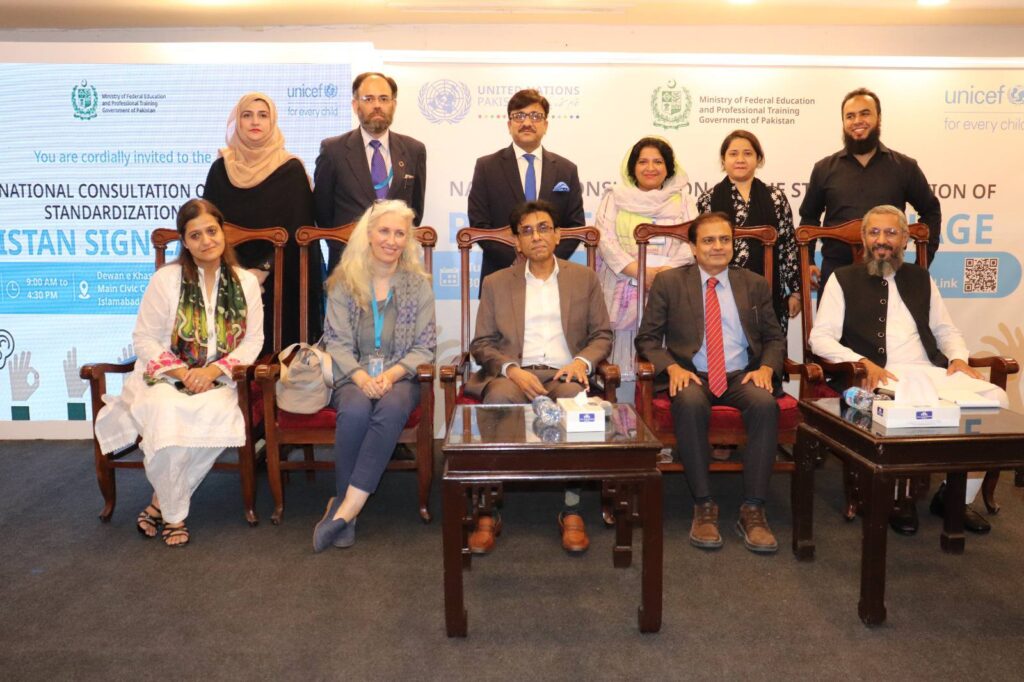
In 2025, the DGSE organized the National Consultation on the Standardization of Pakistan Sign Language, bringing together Deaf individuals from both dialects and communication experts like Raza. That September, the consultation met with government officials, Deaf leaders, and community members to discuss a standardized dialect. The Consultation looks to bridge the two principal dialects “into a single, comprehensive, and evidence-based PSL that is culturally and academically sound,” according to Raza. The consultation held its first meetings in December 2025 to review and validate existing published PSL sources.
Internet Access as a Lifeline
Waqas Ramzan, a blind entrepreneur and inclusion activist, relies on cabs for transportation. Some Pakistanis consider booking a cab online to be a luxury, but Ramzan says it is a necessity for people who are blind or have low vision, both for daily travel and to evacuate to a safer area when conflict or disaster erupts.
In November 2020, Ramzan was traveling home from university when a political protest broke out. His cab driver had to find an alternative route to avoid the situation. For people who are low-vision or blind, like Ramzan, the inability to see their whereabouts can be dangerous. “The cab driver can be taking the right alternative route, but we are never sure that it’s safe,” Ramzan says.
That’s why Ramzan turns to navigation apps, like Google Maps, on his smartphone to help him determine his location. He can also get in contact with family or friends to inform them that his 45-minute commute home may turn into a three-hour journey to avoid protests. However, the government’s routine internet shutdowns restrict GPS services and communication, both used for routine safety and evacuation purposes.
Section 54 of the 1996 Pakistan Telecommunications Act authorizes the suspension of mobile and broadband internet during a state of emergency, but officials have repeatedly invoked loosely defined security concerns to justify shutdowns during elections, protests, and even holidays. This censorship jeopardizes the safety of those who rely on the internet. While non-disabled individuals may find workarounds, Ramzan says that’s not an option for everyone. “For us, it’s a necessity, not a luxury.”
Planning for Everyone, Not Just Some
A narrow understanding of disability leads to shortcomings in planning and implementing humanitarian relief, Raza says. Aid must incorporate the diverse needs of people with physical, sensory, intellectual, psychosocial, and multiple disabilities. “When infrastructure and services are designed with universal accessibility,” Raza says, “the risks and repercussions during the disasters and conflicts are significantly reduced.”
Even if communication channels become more inclusive, Raza states that a lack of access to disaster preparedness education limits people with disabilities’ ability to take timely action and respond to emergencies effectively.
Data collection also needs to be inclusive. According to Raza, a 2023 national census only had one checkbox to determine if a household had an individual with a disability, neglecting to take note of what type of disability. “Without this level of detail, it becomes nearly impossible for the government to design humanitarian response, ensure accessible communication, or plan effective evacuation strategies that meet the specific needs of different disability groups,” he says.
To keep moving toward a more inclusive future, Ramzan says telling the stories of people with disabilities is crucial because the media can change people’s understanding of others. That visibility, he says, must extend beyond representation to real participation in decision-making.
“True inclusion means that disabled people are present in our meeting rooms where policies affecting them are made and changed,” Alvi says. “Our place is not simply waiting outside in lines for assistance. Humanitarian response without accessibility is just another form of abandonment.”
Lauren Salemo is a fourth-year journalism and environmental science student at Northeastern University in Boston, Massachusetts, USA.
News From the Global Frontlines of Disability Justice
Joy As Resistance
In Kenya, queer and disabled people are finding common ground around questions of identity, access, family, and belonging. Ahead of a Nairobi event exploring where disability and queerness intersect, organizers and participants talk about the communities they have found and the spaces they are trying to create. “Queer people and disabled people share way more than they think they do,” says one organizer. The event will use storytelling, art, performance, and what its organizers call “queer joy” to start a conversation they say is long overdue.
The Politics of Waiting, Wanting, and Hoping
In Malaysia, disability exclusion is rarely one dramatic denial. More often, writes Beatrice Leong, it is “a series of ordinary delays” — inaccessible schools, symbolic consultations, policies without enforcement, and a system that asks disabled people to wait patiently for dignity and belonging. Blending personal reflection with political analysis, Leong examines what happens when inclusion is promised repeatedly, but justice never fully arrives.
Read more about The Politics of Waiting, Wanting, and Hoping
Beyond the ADA
The ADA’s influence extends far beyond the United States. It helped shape a growing international approach to disability rights that eventually contributed to the development of the CRPD. But global disability movements have also expanded on ideas that U.S. law has yet to fully embrace. “I think many U.S. disability rights activists were surprised to find out how much we could learn from the international community,” says Eric Rosenthal, founder and executive director of Disability Rights International.
Forgotten People
As Nigeria’s growing insecurity crisis spreads, disabled people face barriers that can make escaping violence far more difficult. Across the country, they describe inaccessible emergency warnings, challenges reaching safety, disrupted livelihoods, and limited access to assistance during times of crisis. Their stories reveal how conflict is experienced differently when mobility, communication, and support cannot be taken for granted and how disability is too often overlooked in emergency planning and response.

The Cost of Surviving
After years of failed treatments for complex PTSD, Marian Siljeholm followed an unlikely lead into the underground world of MDMA-assisted therapy. What began as a search for healing became a journey through the science of trauma, the politics of prohibition, and the hidden global network of people risking their freedom to help others reclaim their lives. Their stories would change her own. As Marian writes, “The next morning, I woke with a thought as real as the bed: This is the first day of my life.”
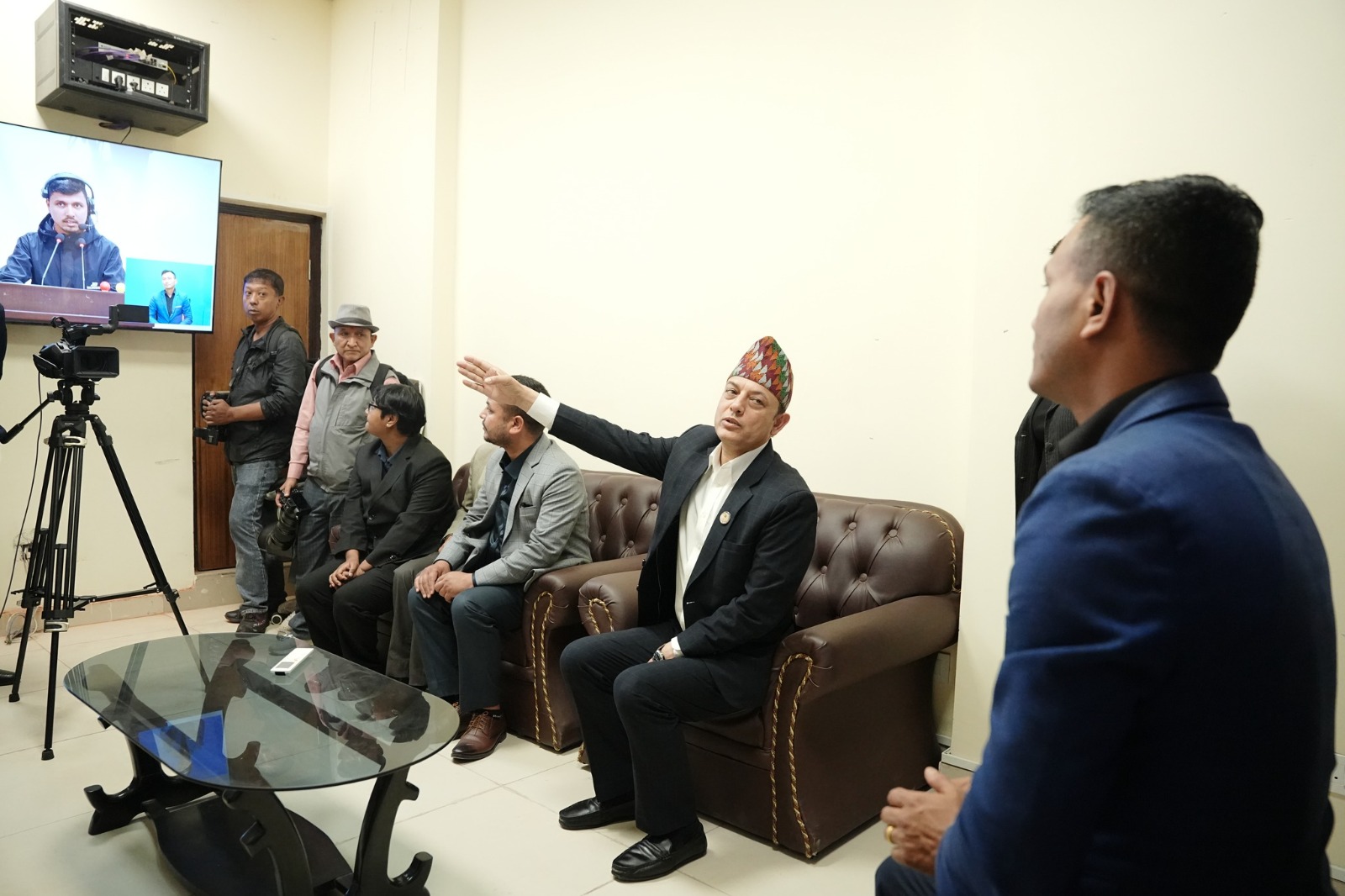
‘Deaf People Are Finally Seen as Equal Citizens’
After decades of advocacy, Nepal’s Deaf community is gaining access to information in its own language. Interpreted national news broadcasts now air twice daily, and sign language interpretation has recently been introduced in parliament. Advocates say the changes mark a major step toward inclusion, recognition, and equal participation in public life for Deaf Nepalis who have long been excluded from critical information and decision-making.
Read more about ‘Deaf People Are Finally Seen as Equal Citizens’