News
Disability in a Time of War
Children with Disabilities in Ukraine Remain Confined to Institutions Despite Promises of Reform
November 28, 2025
Editor’s note: This is the third in our series on conflict and disability. As wars and political violence escalate across the Middle East, Africa, and Eastern Europe, we’re documenting how people with disabilities are being overlooked in humanitarian responses — and why inclusion is more urgent than ever.
Halyna Kurylo, director at Disability Rights International (DRI) – Ukraine, has seen growing investment in orphanages for children with disabilities over the past decade. On paper, it looks like progress: modern renovations and new technology. But beneath the upgrades, the same inhumane practices persist. “New technology installed, new cars, cobblestone fountains — and children tied to beds,” she says. “I get very angry about that.”
Ukraine’s network of residential care facilities, composed of orphanages, boarding schools, and “baby homes” for infants and toddlers, has long been plagued by emotional neglect and inadequate staffing. Before February 2022, the country had the largest population of children in institutional care in Europe, affecting over 90,000 young people, nearly half of whom had disabilities. Ongoing war following Russia’s full-scale invasion has only increased problems for these children.
“Once the war hit, they were immediately left behind,” says Eric Rosenthal, founder and executive director of Disability Rights International.
Staff Overwhelmed
For a 2022 report titled “Left Behind in the War,” DRI brought a team of people with disabilities and family activists, including medical and disability service experts, to visit three orphanages for children ages 6 and older and one baby home. (The report omits the exact locations and names of these facilities to protect their residents during a time of war.) Their findings reveal that when war erupted that February, children with the highest support needs in Ukraine’s institutions were either never evacuated or shifted among understaffed, crumbling facilities.
“People were moved without their patient records,” says Rosenthal. “No one knew what medication they had or needed. The war brought incredibly immediate, visceral dangers for this population.”
Many — but not all — institutions in eastern Ukraine evacuated children to the west, farther from the front lines. Some of those children were ultimately able to leave the country. But the report makes clear that the children who managed to leave had either no disabilities or lower support needs. Those with more complex disabilities were left behind, stranded in facilities that were suddenly caring for even more residents after institutions in the east were destroyed.
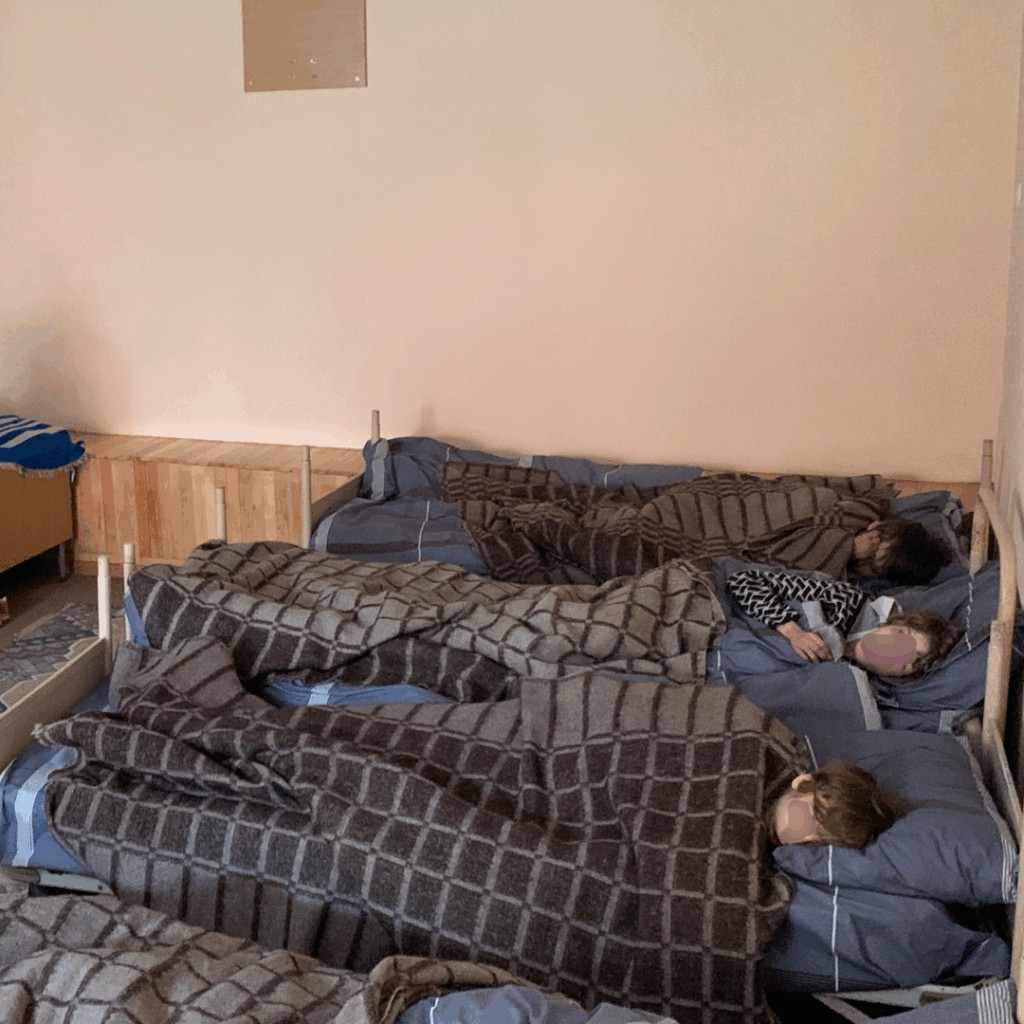
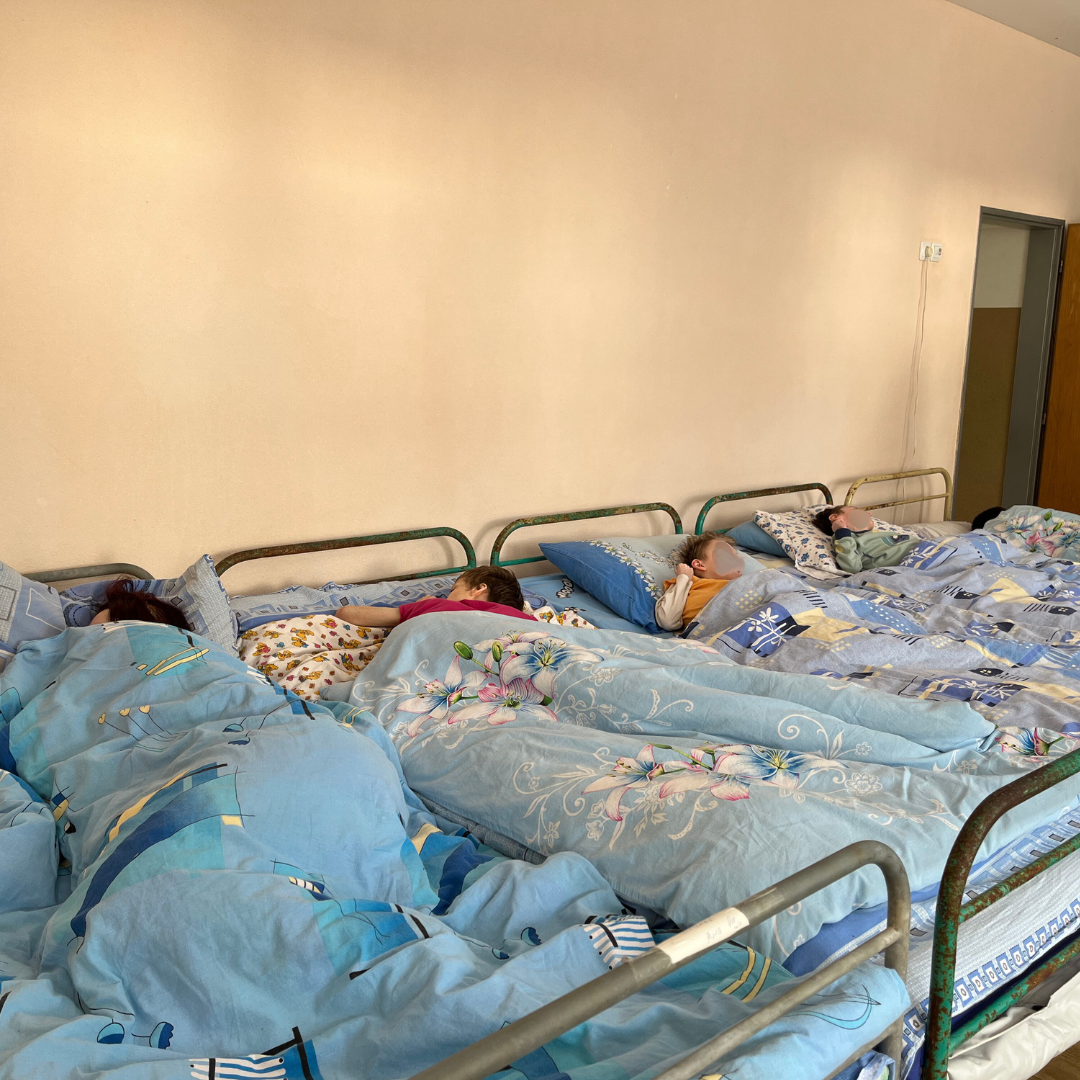
In the facilities the DRI team visited, children were living in dark, cramped, and poorly ventilated spaces. In one place, 14 teenage girls with high support needs were put in a single room, a converted animal stable with windows on only one side. There was only one full-time staff person to care for them and change diapers, and the room smelled of urine and feces.
“In each of these facilities, DRI observed that the already limited staff were now being asked to care for a greatly increased number of children with more complex needs than they are accustomed or trained to care for,” the report reads. “Thus, the lack of personal attention, lack of stimulus, and lack of essential care before the war is increased for children evacuated and children already at the facility.”
One baby home built for 70 children, ages birth to six, took in 35 more from the heavily attacked Kyiv region of north-central Ukraine after February 2022, overwhelming staff as they struggled to care for nearly 50 percent more children than before. While the spaces were clean and diapers were changed, the young residents received little direct attention, leaving babies as young as three months isolated in cribs and older children at risk of severe developmental delays. Investigators observed babies showing signs of emotional neglect, such as rocking and self-harming behaviors.
Among the Highest Child Institutionalization Rates Worldwide
The issues plaguing orphanages for children with disabilities have been exacerbated by the war, but they predate the current crisis. Many Ukrainian children with disabilities end up institutionalized not because they are orphans but because their families lack access to the financial, social, and medical support required to care for them at home. As of early 2022, Ukraine had one of the highest rates of child institutionalization globally, even though over 90% of these children still had at least one living parent.
Since 2015, Ukraine has attempted deinstitutionalization reform, but children with disabilities have been largely excluded. The persistence of the medical model of disability (disability as a “defect” to be “fixed” or “cured”) and the widespread belief that institutionalization is the only way to care for disabled children have entrenched a system that funnels thousands into institutions. For over a decade, DRI has documented how this systemic underinvestment, favoring institutional care over family-based support, has trapped children in what its 2022 report describes as “atrocious conditions” that compound existing challenges or create new ones.
“If you take any child and you do this to them, you are going to end up with at least [a] psychosocial disability or physical disability,” says Kurylo, “because there’s violence, because there’s stunted development, and a child needs to have a one-on-one carer. Otherwise, they don’t develop.”
Kurylo says this is a violation of the United Nations Convention on the Rights of Persons with Disabilities (UNCRPD), which states that people with disabilities have the right to live in the community and cannot be forced into a particular living arrangement. Though Ukraine ratified the UNCRPD in 2010, the government continues to support these facilities.
Rosenthal says that, ironically, the war brought new resources to some institutions. “The war may have been the best thing that happened for some of [the institutions],” he explains, meaning they received money to rebuild. “Because they generated interest and they generated money and they got rebuilt, and a lot of them have more of a capacity than they had before.”
Real Change May Take Decades
There are some reasons to believe change is coming, though very slowly. While thousands of children with disabilities continue to languish, Rosenthal and Kurylo say the war has indirectly given momentum to the greater deinstitutionalization movement. The global spotlight on Ukraine, they say, has highlighted the need to close these facilities and invest more in resources that allow people with disabilities to live in community settings. Additionally, Ukraine’s European Union candidacy, according to Kurylo, has sped up the deinstitutionalization movement, in part because there are certain reforms outlined by the EU that the nation must make in order for its accession.
“ I’ve been in this sphere for a long time, and I can see that this is progress,” Kurylo says, adding that real change may take decades instead of years to manifest. “ I would rather not have this help, but the war did accelerate things.”
There has been a renewed willingness on the Ukrainian government’s part to adopt the CRPD into national laws geared at more inclusive education, employment, and independent living. Still, both Rosenthal and Kurylo fear the moment the spotlight turns off, and continue to advocate against the institutional machine many call home.
“You don’t eat when you want to eat according to the schedule, you don’t choose who you live in the room with, you don’t choose what you wear,” Kurylo says. “You are like a soldier or a prisoner, but the only crime you committed is having a disability.”
Henry Bova is a graduate of Northeastern University in Boston, Massachusetts, USA, with a degree in journalism.
Editing assistance by Jody Santos
News From the Global Frontlines of Disability Justice
‘Everything Has Gone Back’
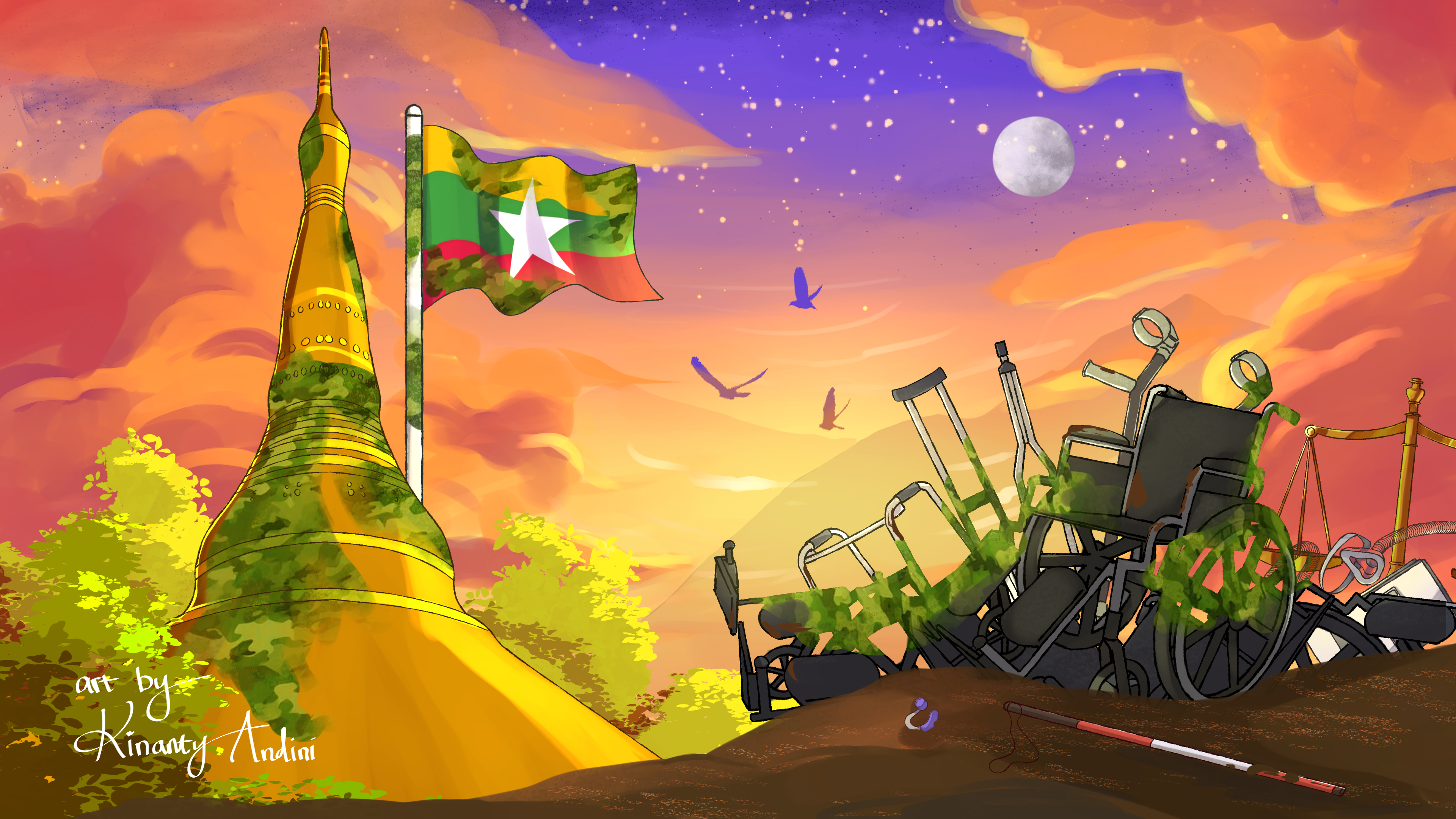
Before Myanmar’s 2021 military coup, disability advocates were helping shape national policy for the first time in decades. Laws expanded access to education, transportation, and public life. Today, much of that progress has collapsed. A new UN report describes a “hidden crisis,” documenting targeted violence, deadly attacks, and the exclusion of people with disabilities from warnings, aid, and services. As conflict creates new disabilities and organizations are forced underground, advocates work quietly to preserve rights that once seemed within reach.
‘I Just Want to Walk Alone’
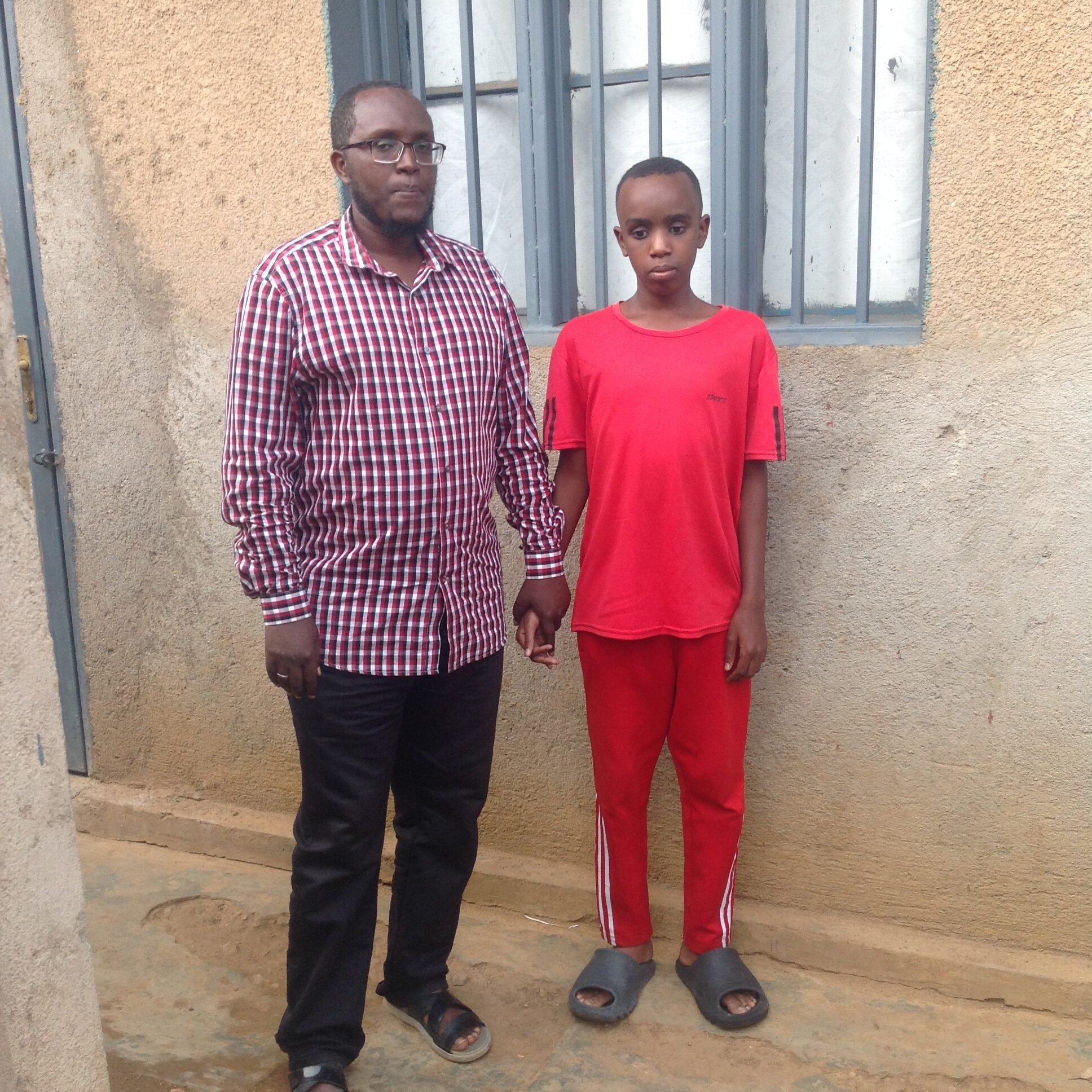
Fourteen-year-old Saifi Qudra relies on others to move safely through his day. Like many blind children in Rwanda, he has never had a white cane. His father, Mussah Habineza, escorts him everywhere. “He wants to walk like other children,” Habineza says, “He wants to be free.” Across Rwanda, the absence of white canes limits children’s mobility, confidence, and opportunity. For families, it also shapes daily routines, futures, and the boundaries of independence.
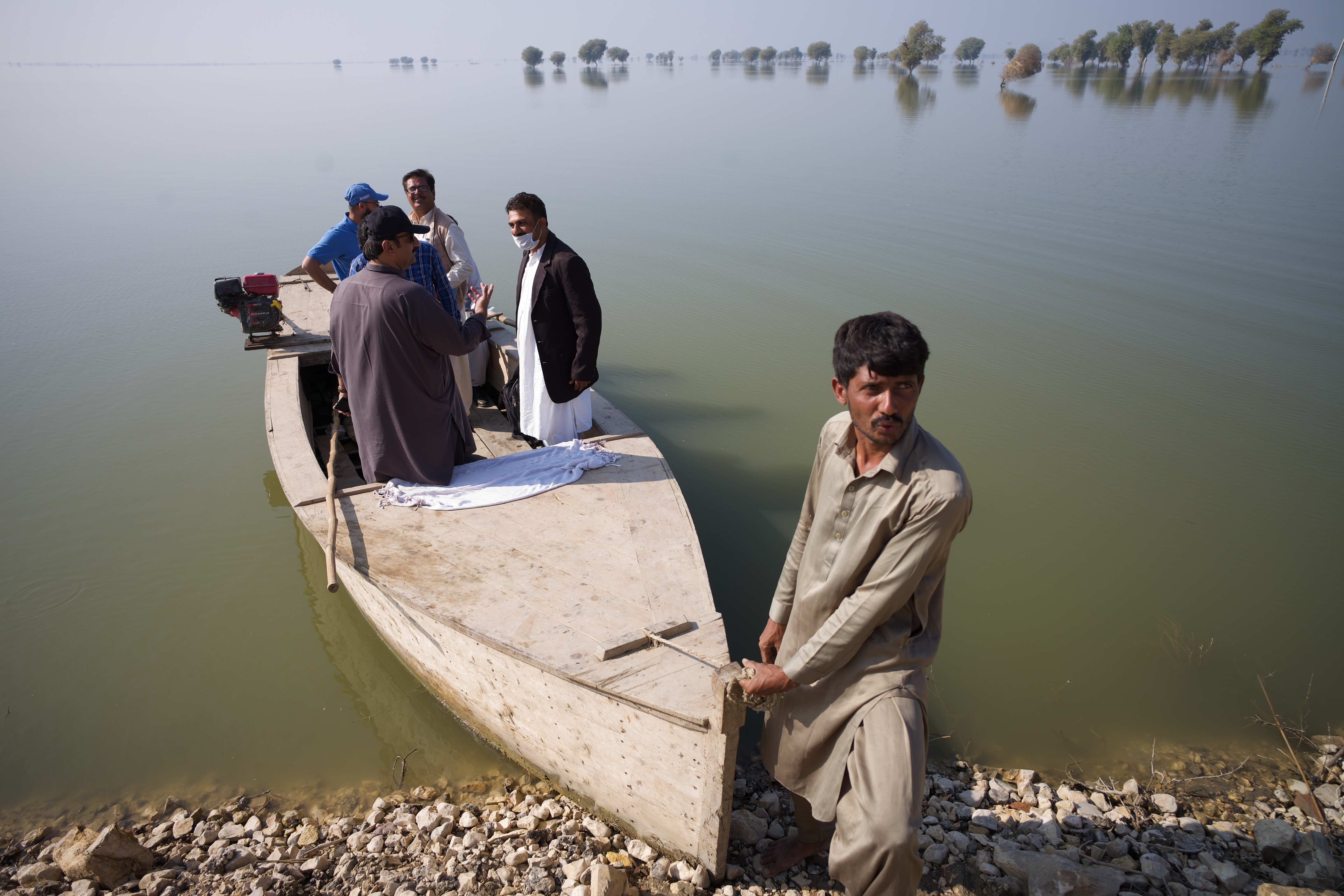
‘Evacuation Routes Are Meant for People Who Can Run’
As climate change and conflict intensify across Pakistan, emergency systems continue to exclude people with disabilities. Warning messages, evacuation routes, and shelters are often inaccessible, leaving many without critical information when floods or violence erupt. “Evacuation routes are built for people who can run,” Deaf author and policy advocate Kashaf Alvi says, “and information is broadcast in ways that a significant population cannot access.”
Read more about ‘Evacuation Routes Are Meant for People Who Can Run’
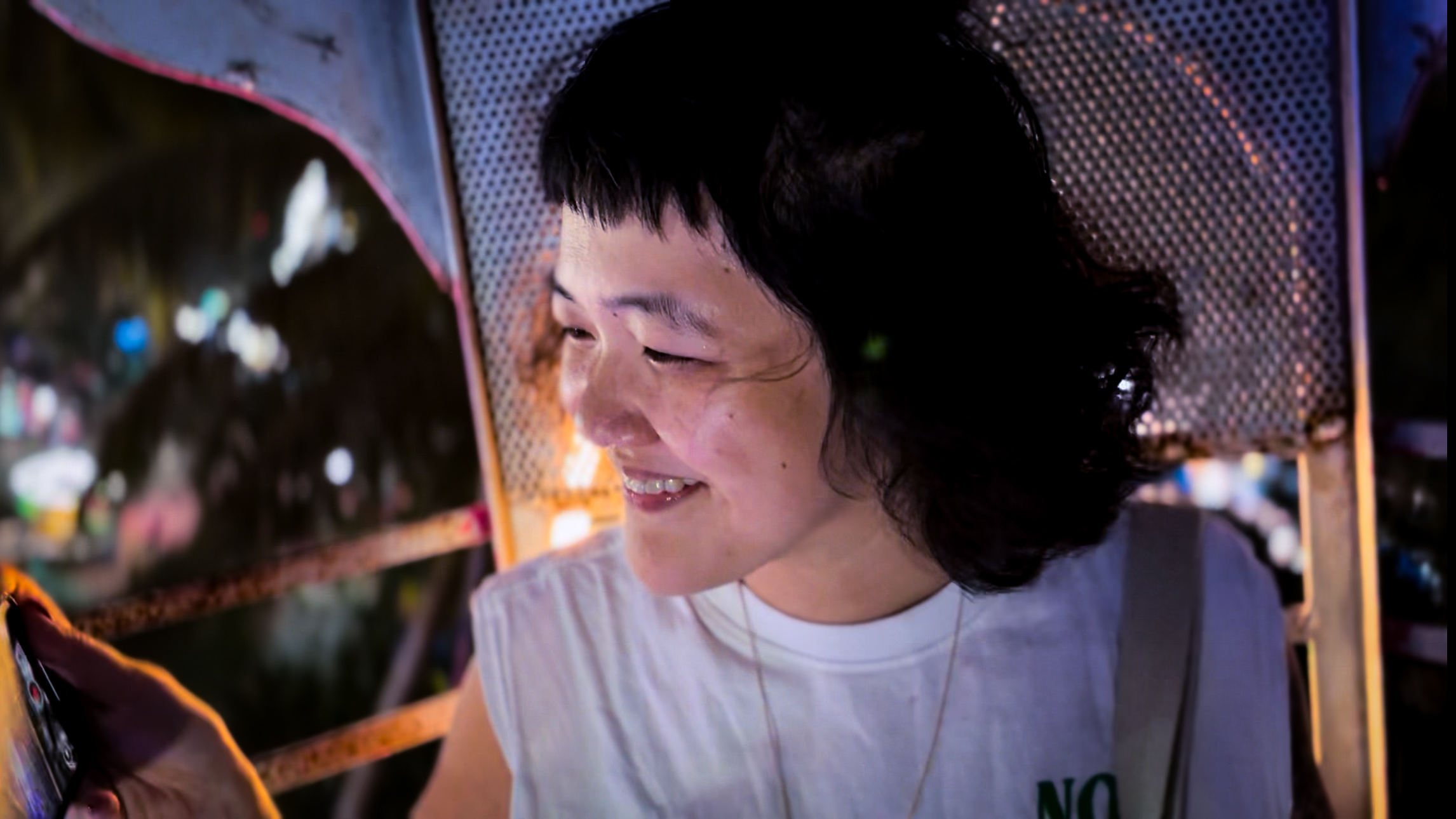
Autism, Reframed
Late in life, Malaysian filmmaker Beatrice Leong learned she was autistic and began reckoning with decades of misdiagnosis, harm, and erasure. What started as interviews with other late-diagnosed women became a decision to tell her own story, on her own terms. In The Myth of Monsters, Leong reframes autism through lived experience, using filmmaking as an act of self-definition and political refusal.
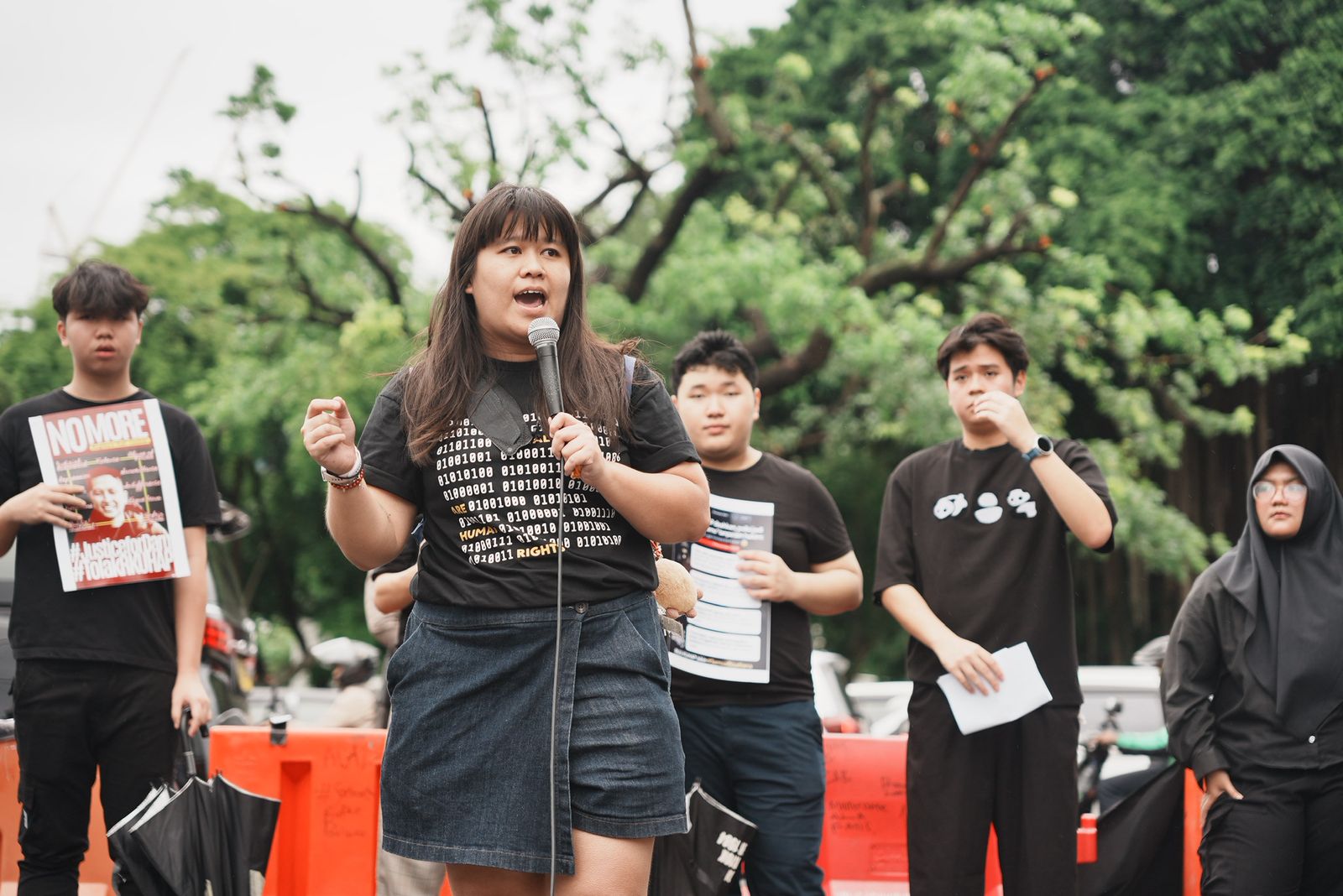
Disability and Due Process
As Indonesia overhauls its criminal code, disability rights advocates say long-standing barriers are being reinforced rather than removed. Nena Hutahaean, a lawyer and activist, warns the new code treats disability through a charitable lens rather than as a matter of rights. “Persons with disabilities aren’t supported to be independent and empowered,” she says. “… They’re considered incapable.”
Disability in a Time of War
Ukraine’s long-standing system of institutionalizing children with disabilities has only worsened under the pressures of war. While some facilities received funding to rebuild, children with the highest support needs were left in overcrowded, understaffed institutions where neglect deepened as the conflict escalated. “The war brought incredibly immediate, visceral dangers for this population,” says DRI’s Eric Rosenthal. “Once the war hit, they were immediately left behind.”