Films
About this video Overcoming Barriers to Health Care
UGANDA: TASO clients and staff talk about the medical climate for people living with HIV and disability in Uganda. *Audio descriptions for blind and low-vision audiences.
Filmmaker: Nissy Namuyomba
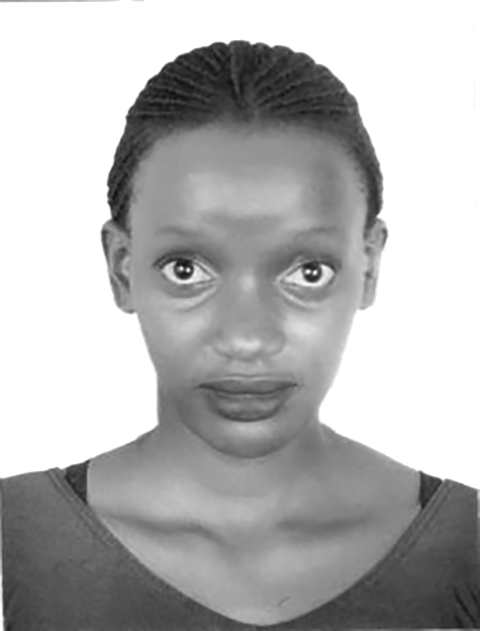
Nissy Namuyomba is an administrative assistant at the Masaka Association of Persons with Disabilities Living with HIV/AIDs and a volunteer with the Masaka Association of Persons with Cerebral Palsy in Uganda. Read more about Nissy Namuyomba
Transcript for Overcoming Barriers to Health Care
The video begins Steven Jjemba, a man with a physical disability walking. His hands are on his feet. He is wearing a black shirt and black pants with orange designs. He has items in his shirt pocket. Melancholic piano instrumental starts.
Cut to Maria Lukundo, a woman who is blind, walking with a man. She has long black braids and is wearing a blue headband. She is wearing a white, purple, red, and brown flowery dress. She is wearing a brown coat over her dress. She is using a white cane. The man is wearing a purple shirt with a white Irish cap. They are holding hands. They are both wearing face masks under their noses. There are two women behind both of them. One of the women briskly walks by. There are some bricks and other construction materials behind Lukundo.
Cut to a man sitting in an office. His name is Edward Muwanga. He is the coordinator of psychosocial & community work at The AIDS Support Organization (TASO) in Uganda. He is wearing a purple and white striped button-down shirt. He is also wearing a blue surgical mask. There is a bulletin board behind him with multiple papers pinned to it. He says, “TASO clients, especially those with a disability, most of them are not employed.”
Cut to Jjemba sitting with a man. They are having a conversation. Both men are smiling. The man is wearing bright orange pants with neon green, red, and blue designs. He is also wearing a gray shirt. He has on a watch and a necklace. Jjemba and the man hold a black sandal. Cut to close-up of Jjemba repairing the black sandal. Muwanga’s voiceover continues, “Keeping clinic visits call for support in form of transport.” Cut to Muwanga. He is seated at a desk with papers on it. He says, “Some people are isolated from the main roads.”
Cut to drone shot of a small village in the middle of a forest. Muwanga continues, “They need to pay some money so that they can reach the treatment center, yet these people are not employed.” Cut to Muwanga. He is holding a blue pen. He continues saying, “Some of them are living without caretakers. They don’t have relatives. TASO as a clinic does not provide transport.” Cut to point-of-view shot of person driving a car around the streets of Uganda. “We only provide treatment.” Cut to Muwanga. He says, “So, people with disability find it very challenging to connect from their places of residence to the treatment center.”
Cut to white building and a parking lot full of cars. There is a white tent to the right of the building with some people standing at it. Cut to a sign of “THE AIDS SUPPORT ORGANISATION (TASO) – UGANDA” in blue font. TASO’s logo, in blue, black, and white, is to the left of the blue letters. The sign also states “HEAD OFFICE & TASO MULAGO – MULAGO HOSPITAL COMPLEX” underneath the blue letters. The overall sign is placed under a tree. The leaves on the tree are gently swaying in the wind.
Cut to a crowd of people sitting on benches. There is chatter in the background. Cut to a close-up of a Ugandan man with short hair. A person with a white and black head covering is seated next to him. “That is TASO. That poses a very big challenge,” says Muwanga.
Cut to Maria Lukundo. She is seated with an orange handbag hanging on the chair. She has on a blue face mask under her chin. Lukundo says [speaking in Luganda], “I live in Bulayi, Masaka City. I became blind in 2015, and I take ARVs that I pick up from TASO.” Cut to Maria Lukundo walking with a man wearing a purple shirt and a white Irish cap on. They both walk past a white gate and up a hill. Cut to a group in a sitting area. Each of them shifts forward to occupy an empty spot along the bench.
Cut to Lukundo. She says, “I face challenges when I’m coming from the village and thus transport is my biggest problem to move to the hospital.” Brief cut to a hallway with people seated on chairs. One man is standing. He is wearing a blue, white, and red jacket. He is also wearing light brown pants and is carrying a brown crossbody bag. He has an orange cap on. Cut to close-up shot of a woman wearing a pink shirt. There are people sitting next to her, on the left.
Cut to Jjemba. He says [speaking in Luganda], “Transport is my biggest challenge because if you don’t have money, it’s difficult to pick medicine from the hospital.” Cut to people in white coats walking past the left side of the frame. Two people are wearing white coats. One woman is wearing white and green shirt, and another is wearing a purple and gold dress.
Cut to Jjemba saying, “It’s important to get means of transport. That’s the biggest challenge, but if you get a person to lend you money, and you get it, you can pay it back.” Cut to Jjemba arranging his blue tool box.
Cut to Jjemba saying, “Right now, in my situation, during the pandemic, motorcycles were not allowed to carry passengers.” Cut to Steven Jjemba sitting with another man. They are having a conversation. Both men are smiling. The man is wearing bright orange pants with neon green, red, and blue designs. He is also wearing a gray shirt. He has on a watch and a necklace. The man hands Jjemba some cash. He picks up a pair of black sandals with minor red designs. They shake hands. Brief transition to Jjemba at his work station. “There were police officers who could stop motorcycles from taking me. I could explain to them that I am disabled, but they could not understand. Motorcycles were being stopped from carrying passengers. I could explain to them that I have to get something to eat. If I stay home, I won’t be able to eat.”
Cut to black screen with yellow words that say, “Steven is a cobbler who makes less than two to three U.S. dollars a day.”
Cut to Jjemba arranging and sharpening his tools. He continues, “Still, some could try to stop me. But still, I found some that were genuine and could understand.” Cut to close-up shot of Jjemba sharpening a tool. “One day I was tempted to go to the District Residence Commissioner. When I reached there, he said unless someone does not understand that your situation is self-explanatory, he assured me that I should continue using motorcycles: ‘In case you get arrested, refer back to me.’” Cut to Jjemba pounding something with a small hammer. There is a person in beige pants, light green shirt, and black and white Nike slippers seated next to him
Cut to Jjemba interacting with the same man wearing beige pants, light green shirt with white words on it, and a white hat. Jjemba continues, “He could understand, but I kindly request the government to sensitize its workers about the requirements of people with special needs, as our disability is visible.”
Cut to a reception area full of women. There are two women at the reception desk. Cut to close-up of one receptionist wearing a brown blouse and a white hijab. She is sorting some papers on a desk while holding a pen. The second receptionist, in a white shirt, appears to give directions to a guest.
Cut to close-up shot of a person using a black pen to fill out a form. There is an orange folder next to them, on a table. Edward Muwanga voiceover says, “We make follow-ups.”
Cut to a poster of the Ugandan flag and a U.S. flag joined together with a big red ribbon on a door. The words “President’s Emergency Plan for AIDS Relief” are underneath the flag in black font. There is another door to the right with a sign that says, “PLEASE USE NEXT DOOR 102.” Edward Muwanga says, “We term that as-home care where we visit patients with special needs.”
Cut to Edward Muwanga speaking. He is seated on a black chair. There is a red, purple, and white curtain behind him. “We come back on at-home care where we visit patients with special needs. At their homes. And, the major purpose of doing this, one is to give them home-based treatment. We can choose to treat them from home. Secondly, to assess the home environment,” says Muwanga.
Cut to close-up of Maria Lukundo. Muwanga voiceover continues, “We’re looking at hygiene – who is providing the basic needs. Yes, we look at the community support.” Cut to Lukundo walking with a man. She is wearing a brown coat over her dress. The man is wearing a purple shirt with a white Irish cap. They are holding hands. They are both wearing face masks under their noses. There are two women behind both. There are some bricks and other construction materials behind Lukundo.
Cut to Muwanga. He says, “First of all, give them empowerment counseling. We make them realize the opportunities around them. We make them realize the resources that they may take to their advantage.”
Cut to a man in a white coat. He is wearing a gray button-down shirt and black pants. He examines a woman’s arm with a pair of white disposable gloves on. The patient is wearing a white dress with black designs. There is medical equipment behind the man. Cut to a close-up of the medical professional. He briefly looks to the left. Cut to a close-up of another patient. She has blue earrings on. Cut to a close-up of the medical professional injecting a needle in the patient’s skin.
Another cut to a woman wearing a dark brown shirt with the sleeves rolled up. She presses a cotton swab on an injection site on her arm. She has short hair and is wearing blue earrings. “We provide them with adherence counseling concerned with how best can they take the treatment and how can this treatment be of help to you,” says Muwanga.
Cut to Maria Lukundo holding a book. There is a yellow box with black words on it that say, “A book showing how a patient can best use their ARVs and when they are expected to report back for further medical checkups.”
Cut to Edward Muwanga saying, “We go ahead to provide family counseling.” Cut to two women speaking to each other on a bench outside. There is foliage and grass behind them. One woman’s back is turned back to the camera; she has reddish brown braids tied in a ponytail and is wearing a green shirt with another lace black shirt over it. She has on gold hoop earrings. The woman she is speaking to has on a black shirt with a black and white shirt over it. She has short black hair. Cut to close-up of a woman with short hair speaking to a woman with braids. Muwanga says, “Because we have had cases of discrimination, family members can choose to neglect that person.”
Cut to Muwanga explaining, “So there, TASO… intervenes and talk to the family members, making them realize the value, the worth, of this person living with HIV and disability.” Cut to a close-up of the woman with the white and black shirt making hand gestures. Cut to the two women speaking to each other on a bench. There is a covered walkway behind them.
Cut to Muwanga saying, “Instances where people with disability have been abandoned, we talk to the family members, and we see how we can reunite them.”
Cut to Maria Lukundo walking with a man wearing a purple shirt and a white Irish cap on. They both walk past a white gate. Muwanga says, “We talk to the family members, and we see how we can reunite them.” Cut to Muwanga. “So, that kind of family counseling, to the families, where we have a person on treatment, and this person is living with HIV is very much emphasized. That family counseling.” Cut to close-up of Muwanga at his desk. He is looking downward. “We provide HIV preventive counseling to the people with disability so that they don’t get HIV,” he says. “Because the person with a disability has a right to enjoy the sexual rights, have sexual partners, you know?”
Cut to close up of Lukundo holding two white pill bottles of ARV drugs. There are black words written on the pill bottles. She is seated on her brown coat on a red and white mat. Her orange handbag is next to her. There is a yellow box with black words that say, “A client holding ARV drugs.”
Cut to two people sitting at a table. Papers are hanging on light blue walls around the room. Two men with white coats are in the room. One of them walks across the room. Melancholic piano instrumental transitions to melancholic guitar instrumental.
Cut to four men and one woman standing near each other. They are all wearing white coats except for one man in a yellow shirt. The woman is holding a green pen. Some of them smile and laugh in conversation.
Cut to Steven Jjemba saying [in Luganda], “First of all, most especially those people in the government positions, they have to consider that people with disabilities are like other people.”
Cut to a dimly lit reception area. Two people are seated behind a desk while one woman with a white shirt on stands at the desk with her hands resting on her face. The woman’s arm is resting on the reception desk. A security guard in a blue uniform and hat walks past the reception desk.
Cut to Jjemba. He say, “Because in case someone goes to the hospital and explains to the officials that I have a disability, I kindly request that they should allow me to use the motorcycle to receive my medication.”
Cut to a point-of-view shot of a person as a passenger on a motorcycle ride. The sun is setting.
Cut to Jjemba. He says, “And I leave as early as I can to do other things, as it’s not allowed and yet you have requested them and he can visibly see it.” Cut to a room with hospital beds. People are occupying the beds on the left side of the frame. There are blue mosquito nets above the beds. A man with a white coat on walks down the room and past the frame. He has a black stethoscope around his neck and is wearing a red and white button-down shirt with black pants. He has a small white book in his hands.
Cut to close up of Jjemba walking. Cut to Jjemba speaking [in Luganda], “As our disability can’t be hidden but you request them and they instantly refuse but honestly can see it.”
Cut to the outside of a white and light blue building. One van is parked on the left. A blue car on the right drives off. Two men walk in opposite directions.
Cut to Edward Muwanga. There is a brown shelf to the left stacked with black binders with white labels on them. Underneath the shelf is a brown cabinet with a blue plastic water bottle and other items. There is a calendar behind Muwanga and a brown door to the right. He says, “Once a person living with HIV and a person is having a disability, once confirmed HIV positive, it is important that you accept the serostatus status: ‘I am HIV positive.’ Yes, you accept and look at the way forward.”
Cut to Lukundo standing in front of construction materials outside. There is a woman in what appears to be a blue and white dress behind her. Brief transition to Jjemba smiling. Muwanga says, “Because after accepting, you can make good treatment plan. But if you deny the test results, you cannot come up and make good treatment plan.”
Cut to a woman with a pink blouse and a white coat on. Her hair is in a high bun. She is assembling medication. There is another person wearing a white coat to her left. They are doing the same thing. Brief transition of a close-up of someone sorting pills with a gold-colored tool.
Cut to a man wearing a white coat speaking with a woman in a red and white shirt at a kiosk. There is a person wearing a black-and-red shirt with black pants, waiting behind her. The man hands the woman at the front of the kiosk a piece of paper.
Cut to Edward Muwanga saying, “And work with a support team, work with a team of counselors, work with a team of peer educators.” Cut to a room full of people conversing with one another at a table. There is a stethoscope and papers on the table. “Make a plan for the positive living: ‘How do I live with HIV and disability?’” Cut to Muwanga saying, “Of course, life will go on, as somebody’s on treatment.”
Cut to black screen with a title card in a yellow font that says, “It’s important to note that we are all potential victims of disabilities through diseases like HIV, accidents, wars, and natural calamities. Creating an inclusive environment for people with disabilities makes accessibility easier for other people and prepares for those incoming uncertainties. Let us work on not leaving anyone behind.”
Melancholic guitar instrumental fades out. Screen fades to black. Cut to Copyright- @2022. MADIPHA. All rights reserved.
About this video ‘Put Words into Action!’
MALAWI: Malawians with disabilities continue to encounter inaccessible public infrastructure. *Audio descriptions for blind and low-vision audiences.
Filmmaker: Julie-Marie Chibekete
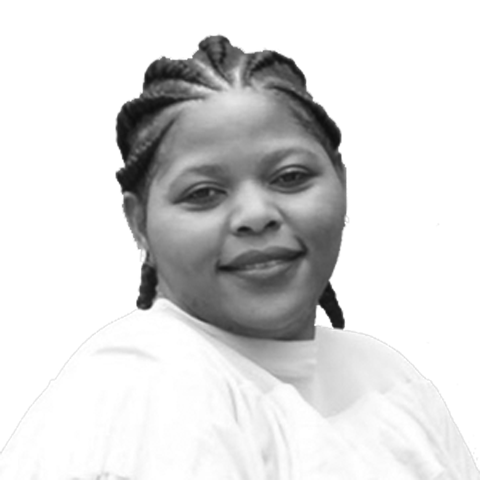
Julie-Marie Chibekete is a program assistant (monitoring and evaluation) for the World Food Programme Malawi country office and an active member of the Spinal injuries Association of Malawi (SIAM). Read more about Julie-Marie Chibekete
Transcript for ‘Put Words into Action!’
The video begins with a piano instrumental playing and a black screen with yellow words. A woman narrator reads the words, “Malawi Accessibility Challenges.”
Video cuts to a driveway, where Bernadetta Vazi, a woman in a wheelchair, is moving toward a curtained doorway. As she disappears into the doorway, a girl with a green shirt begins to run across the driveway but shyly stops when she sees the camera.
Video cuts to another driveway, where Derrick Kumwenda, a man in a wheelchair, is being pushed by another man up a steep ramp to a doorway. The ramp is blocked by a rolled-up rug, and the wheelchair is unable to get past it.
Cut to a yellow screen with black words. The narrator reads the words, which say, “12 years since Malawi ratified the United Nations Convention on the Rights of Persons with Disabilities (UNCRPD).”
The screen transitions to brown with white and yellow words that the woman continues to read, “It is 10 years into Malawi Disability Act.”
The video cuts to Sekerani Kufakwina, who is a government human resource officer and disability advocate. Sekerani is Deaf. He wears a red and white shirt with tan khakis and is sitting in a chair outside. A phone is on his lap. A sign language interpreter appears on the bottom-right corner of the screen and interprets for the remainder of the video.
Sekerani signs as the narrator interpret, “Malawi ratified the UNCRPD in 2009. A lot was just signed on paper with no implementation. The policyholders and general public have a poor understanding on issues of accessibility. Physical access and access to information is still a challenge.”
The screen cuts to a yellow background with black words. The narrator reads, “Poor accessibility continues to deny persons with disabilities independence, posing a safety and security threat.”
The screen cuts to Derrick again as he gets out of a white car, assisted by the same man as before. After shutting the car door, Derrick neatly stacks a folder with white papers on his lap as he is wheeled toward the ramp, which we see if blocked by the rug.
The screen cuts to an interview with Derrick sitting in his wheelchair outside a white stucco building. He is wearing a purple and white striped shirt, black pants, and white sports shoes. He introduces himself: “My name is Derrick Kumwenda. I’m paraplegic, I have what is spinal cord injury. And currently, I’m a credit analyst working for National Economic Empowerment Fund.”
The video cuts to a newspaper headline that says “Make ATMs user friendly.”
Derrick continues, “I‘ve had challenges in accessibility, mostly to the public sector buildings and services.” Cut to a photo of a wheelchair-inaccessible “NB Moneycard” ATM. “I cannot go to the market because the places are not accessible for someone who is disabled, mostly on a wheelchair.” The video cuts to a point-of-view shot of an “NB Moneycard” branch from inside a car. Because of the way the ramps are constructed, I cannot do it on my own,” says Derrick. The video cuts to a steep inaccessible wheelchair ramp entrance to a building. “I have to rely on someone to push me on the wheelchair. So, sometimes you find that the person who is pushing you is not experienced enough and they can even push you away from the ramps.”
The video cuts to Derrick being pushed up the blocked ramp again. The man pushing him is unable to get the wheelchair past the rug and has to move it out of the way.
Derrick continues, “The workspace is not that friendly because the workstations that are there are not accessible enough for someone on a wheelchair. Because this problem, I’m forced either to come out of the office to visit nearby places whereby I can access the toilets, or sometimes I’m forced to work from home.”
The video cuts to a headline that says, “People with disabilities struggle in Malawi’s cities.” The sub-headline says, “How can the Sustainable Development Goals help children with disabilities in Malawi’s cities?
Derrick continues, “In my opinion government is giving a blind eye to the whole situation because each and every year the budget passes by.”
The video cuts to another headline that says, “Malawian school children with disability struggle to access drinking water and toilets.”
Derrick continues, “We are even given an example of the Ministry of Disability whereby I would have thought that that would have been the most friendly place.”
The video cuts to a photo of several people sitting in the wing of the Disability Ministry.
Derrick continues, “You find that to access the wing of the Disability [Ministry]; it’s on the second floor, and most of the times the lifts to the place are broken down. Newly constructed buildings.”
The video cuts to a man walking up a ramp to get to the wing of the Disability Ministry. A caption reads, “The ramp is too steep.” Then the video cuts to a photo of another steep ramp.
Derrick continues, “Newly constructed buildings, they easily pass by the city assemblies and the city councils whereby they are supposed to be rejected because most of the buildings are not disabled-friendly.” Cut to another photo of a steep ramp.
The video cuts to Bernadetta as she negotiates a steep hill in her wheelchair. Cut to an interview with Bernadetta. She is wearing a black shirt, pants, and shoes. She sits in her wheelchair in a shaded grove of trees. Bernadetta [speaking in Chichewa] says, “Bernadetta Vazi, Executive Director of Joy Abilities Empowerment. As the director of JAE, I’m quite often called to meetings in different hotels.”
The video cuts to a photo of Bernadetta holding a microphone and speaking in a hotel lobby. Cut to another photo of Bernadetta sitting with colleagues at a hotel conference table. Bernadetta continues, “However, I fail to concentrate on the meeting’s agenda, as I keep thinking of how I access the different facilities.”
The video cuts to a photo of a hotel bathroom. A caption reads, “Wheelchair-inaccessible bathroom design.”
Bernadetta says, “I switch my focus to how I will maneuver whilst my colleagues, physically able-bodied, are relaxed.”
The video cuts to Bernadetta pushing down a dirt road in a wheelchair.
The video cuts to a yellow screen with black words, and the narrator reads, “A fundamental human right is for disabled people to gain access and participation on an equal level with others, regardless of our impairments.”
The video transitions to another yellow screen with black words and the narrator reads, “Article 9, paragraphs 2 (d) and (e) of the UNCRPD, provide that buildings and other places open to the public should have signage in Braille and in easy-to-read and understandable form.”
“And that live assistance and intermediaries, including guides, readers and professional sign-language interpreters should be provided to facilitate accessibility.”
The video cuts to Sekerani’s interview again. He signs, “Government should try to find sign language interpreter trainings.”
The video cuts to vaccine footage by Reuters of Malawian officials displaying COVID vaccines. Several people wear masks with a crowd around them.
Sekerani continues, “Because of the language barrier, Deaf persons in the country have inadequate information on COVID and its updates.” The video cuts to two doses of the COVID vaccine on a red table. A brief cut to multiple COVID vaccines in a cardboard box. “Like vaccination and information on the recently discovered variant,” he says.
The video cuts to shots of the Kamuzu Central Hospital.
Sekerani continues, “This information is broadcasted on TV on daily basis, but it is in a language that a Deaf person can’t understand.”
Cut to a yellow screen with black letters. The narrator reads, “Currently, there are less than 10 professional sign language interpreters in Malawi. The national media house has two interpreters restricted to news, which is 1 to 3 percent of national coverage. With this, not even the presidential national address on COVID is covered.”
Cut to a newspaper headline that reads, “Malawi government shows little interest in improving access to information.”
The video cuts to a woman, Martha Chambalo, wearing a flowing purple skirt and red blouse walking barefoot around the corner of a building. Cut to Martha Chambalo sitting on a chair in front of the bumper of a red van.
Martha [speaking in Chichewa] says, “I’m Martha Chambalo, popularly known as Mrs. Kainga. I am a visually impaired lady. I’m the teacher at the Nanthenje Primary School. I became visually impaired at a young age.”
The video cuts to Martha indoors, arranging furniture in a living room.
Martha says, “Growing up, I encountered several challenges. In class when given assignments, I couldn’t read on the chalkboard. I relied on classmates to read it out for me but some denied to help.”
The video cuts to Martha straightening a tablecloth in a living room.
She continues, “I could stay behind to copy notes. Books were scarce at school, even at the teacher training college, which made it hard for me to learn.
The video cuts to another shot of Martha straightening a tablecloth in a living room.
She continues, “ It is by God’s grace and my hard work that I completed school.”
Video cuts to Martha seated behind a red van. She says, “Going to the borehole, people in the community laughed at me, saying I can’t draw water as I was blind. ‘Why does she bother to go to school? She can’t succeed. Even if she succeeds, who would employ a person who is visually impaired?’”
The video cuts to Martha arranging items in a living room. She says, “I see grace that I’m working and supporting even those that laughed at me. Working with the Minister of Education as a teacher, we are challenged with lack of teachers and learners with books that are in Braille.”
The video cuts to a shot of Martha collecting a book and placing it on a table in a living room.
Martha continues, “The Minister says it’s expensive, hence teachers with visual impairment fail to effectively deliver as fellow sighted colleagues do. Even writing materials like Perkins Brailler, stylus, and Marburg [Braille instrument setting] are not available. We just use our experience to teach. We ask colleagues to help read out tomorrow’s classwork. Some don’t offer to help, saying they don‘t share our salary.”
Cut to Martha reading a textbook in Braille as she sits in her living room. “In class, we use more intelligent pupils to identify those lacking behind and other class management methods like group work I employed.”
The screen cuts to a yellow screen with black words. The narrator says, “Accessibility is a civil right, a human rights principle running through the UNCRPD. Inaccessibility is discrimination, a violation of the right to equality, freedom of movement, or independent living.”
“Human rights are indivisible, interdependent, and interrelated. There is a cascading effect when just one right is denied.”
The video cuts to Martha sitting on the bumper of the red car, saying, “I feel government just wants to be perceived as thinking of us as people, persons with disabilities. but no tangible action. They are failing.
The video cuts to a slow-motion shot of Martha and her fingers reading Braille. “They say our Braille materials are expensive, why is government failing to buy Braille materials?” she asks. “This affects employment opportunities for the disabled. But yet the same government is able to buy books for other people, printers, which are equally expensive. Persons with disabilities are restricted to teaching because of accessibilities issues yet they can deliver beyond teaching. We are capable of being employed in various ministries. Disability should not be a barrier. I have never seen government giving assisted devices like white canes to the blind or wheelchairs to people with mobility challenges. Only non-government organizations intervene.”
The video cuts back to Sekerani’s interview. He signs, “I have few words. This is time to act. For years it has been a song and a lot has been signed. But this is a time to act. The 2018 Disability Act Agenda must be adapted. We have to act now. Paperwork time is over. Laws are provided. They must be followed and enforced.”
The video cuts to Derrick saying, “I think the government needs to really to think seriously about the Disability Act because it’s affecting most of the disabled people in the country. Economically, socially, they’ve been affected.”
The video cuts to Bernadetta moving outside in a wheelchair towards Julie-Marie Chibekete, another woman who is also in a wheelchair. Julie-Marie is holding a phone with a laptop on her lap. Derrick continues, “Because it doesn’t really necessarily require the government to push in money. There are some other issues that just need policy direction.”
The video cuts to a yellow background with black words. The narrator reads the words, which are all quotes from Sekerani, Martha, Derrick, and Bernadetta.
“Everyone, irrespective of disability, needs access to buildings and information. This is time to act!” – Sekerani Kufakwina
“Poor accessibility is a serious violation of our human rights. Accessible Language Now!” – Martha Chimbalo
“When I travel beyond Malawi I feel at home. I am more independent. We need an accessible Malawi now!” – Derrick Kumwenda
“Accessible buildings are essential for equal participation. Accessibility by Universal Design Now!” – Bernadetta Vazi
A title card says “Copyright @2022 SIAM All Rights Reserved.”
About this video Equal Opportunity for All
NIGERIA: Driven by his own experiences with DeafBlindness, Solomon Olakunle Okelola advocates for the rights of people with disabilities to be fully included in society. *Audio descriptions for blind and low-vision audiences.
Filmmaker: Oluwabukolami Omolara Badmus
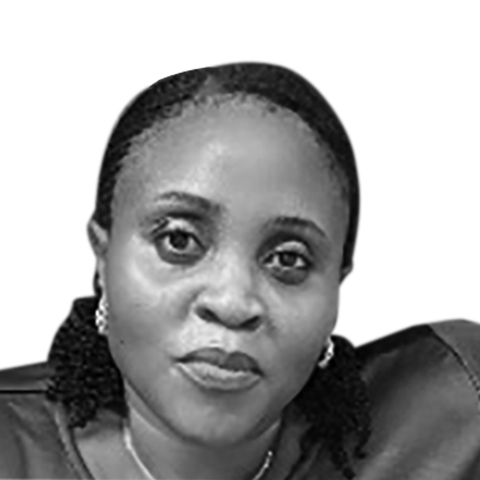
Oluwabukolami Omolara Badumus is a disability rights activist and feminist based in Lagos, Nigeria. She is both the financial secretary and Lagos state coordinator for the Lionheart Ability Leaders International Foundation (LALIF). Read more about Oluwabukolami Omolara Badmus
Transcript for Equal Opportunity for All
The video starts with soft, hopeful guitar music, mixed with some trumpet. Cut to a metal gate. Solomon Olakunle Okelola opens the gate and walks through. He is wearing a green button-down shirt and brown pants and has a headset around his neck. He is carrying a white cane. Okelola is a Nigerian man with closely cropped hair. He is DeafBlind.
“My name is Solomon Olakunle Okelola,” he says. He closes the gate behind him.
Cut to Okelola sitting in an interview. He is wearing a red turtleneck shirt and a hearing aid in one ear. The interview background is a white, shimmery curtain with diagonal stripes of brown and tan. “And I am the executive director Lionheart Ability Leaders International Foundation.”
Okelola locks the gate and, using his cane, walks toward the building. “Lionheart Ability Leaders International Foundation is a non-governmental organization of patriotic citizens who have the zeal to work together to make a difference in their society with special regard to individuals with disabilities – women and children.”
Okelola is standing at the bottom of the stairs. “Some people think DeafBlind cannot climb the staircase. Here we go!” he says. Okelola folds up his cane and starts walking up the stairs. When he gets to the top, he swings from a bar: “Here we are!”
Cut to inside the Lionheart offices. A man stands at a table, talking with staff. “We work to enlighten the general public and the government about the ability of individuals living with disability about the true nature and need of these individuals and how everybody can join hands together to provide for these needs with the aim of giving these individuals ample opportunity to lead meaningful and productive lives in their society,” says Okelola. More shots from inside the office. A man with dark sunglasses sits in a chair. He has a mask around his neck and is wearing a brown striped, short-sleeve polo shirt. He is talking with the man standing at the table. A woman with albinism looks at her phone. She has long, brownish-red hair and is wearing a pink shirt and sunglasses on her head. Another woman with large glasses and her hair piled into bun smiles at the camera. She is wearing a pink, frilly blouse.
Cut to the man with dark sunglasses sitting in the chair. Okelola says, “We work to equip people with the communication, interpersonal and emotional intelligence that will enable them to live peacefully one with another to bring out the best of themselves for self-actualization and for societal progress and transformation.”
Cut to Okelola swinging from the bar at the top of the stairs. He says, “And!” He drops his cane, and it clatters down the stairs. “I think we have to do that one again,” he says. Someone laughs off-camera.
A quick fade to black, and then these words come onscreen: Copyright @2021 Lionheart Ability Leaders International Foundation. All rights reserved.
About this video If There’s a Wheel, There’s a Way
MALAWI: SIAM's Scader Louis works to address the needs of persons with spinal cord injuries from a rights-based approach. *Audio descriptions for blind and low-vision audiences.
Filmmaker: Julie-Marie Chibekete
Julie-Marie Chibekete is a program assistant (monitoring and evaluation) for the World Food Programme Malawi country office and an active member of the Spinal injuries Association of Malawi (SIAM). Read more about Julie-Marie Chibekete
Transcript for If There’s a Wheel, There’s a Way
Video starts with soft piano music with guitar. Scader Louis, a Malawian woman with short dark hair and a pink shirt and floral pants, is seated in a wheelchair at her desk. She wheels her chair toward the camera. “So my name is Scader Louis,” she says. “I’m the co-founder of Spinal Injuries Association of Malawi.”
Video cuts to a closer shot of Scader at her desk, looking at her computer. “I’m also the vice-chairperson of Federation of Disability Organizations (FEDOMA) in Malawi,” says Scader, as the video cuts to her in an interview. She is seated in front of a beige couch and wall, with patterned brown-and-white curtains behind her.
Video cuts to a group of men in wheelchairs gathered in a circle outside. “SIAM – Spinal Injuries Association of Malawi – is a grouping of people like myself who have spinal cord injury,” says Scader. Video cuts to a series of photos of SIAM members. “And it was started by a group of, I think, five people (I was the only lady) in 2011 after we noted that persons with spinal cord injuries, we are facing a lot of challenges.”
Scader continues: “When you look at someone in a wheelchair like myself, often people assume that my challenges are the same as someone maybe with polio.” Video cuts to a photo of SIAM members seated on a bench inside. “With spinal cord injury comes a number of secondary complications with the injuries,” says Scader. “Because this is an acquired disability, you may not have had a full understanding of your rights as a person, but you also need to be integrated back into the community and be able to participate and to make your own contributions.”
Video cuts to a woman in a wheelchair collecting money. People are dancing around her and throwing money into her bucket. “So in 2011, there wasn’t a lot of information around spinal cord injuries,” says Scader. Video cuts to a series of photos of SIAM members. “There wasn’t a network, and because as a group we noted that gap we thought of starting this grouping, and I’m happy to report that over the years it has really grown,” she says. “So we are working with the Queen Elizabeth Central Hospital.” Video cuts to an exterior shot of the hospital. “We were also partnering then at the district level with Malawi Against Physical Disabilities (MAP), and we are visiting rehabilitation centers,” Scader adds. Video cuts to an exterior of MAP with a banner across the front of the building that says, “MAP: Malawi Against Physical Disabilities.”
Video cuts to a photo of a Malawian man pushing a woman in a wheelchair over a threshold and into a brick building. “We are also visiting our peers in their homes,” says Scader. “We are in all the regions in Malawi. We are in all the districts.”
Video cuts to a wide shot of a group of Malawian men playing basketball outside. You can hear someone off-camera laughing. “The funding that we recently received from DRF – the Disability Rights Fund – we are training more people to become peer supporters even in their districts, “Scader continues.
Video shows a young Malawian woman in a wheelchair receiving a certificate at an event. She and the presenter turn to the camera and pose with the certificate. “There’s a lot that we need to do because government really is not placing issues of disability as a priority,” says Scader. Video cuts to SIAM members in wheelchairs playing basketball outside.
“Government is a duty-bearer, so it is supposed to take care of its citizens,” she says. “Persons with spinal cord injury but also people with disabilities they do pay taxes, and they’re supposed to benefit from the programs that government is implementing.”
Video cuts to Scader in the interview. “We shouldn’t leave anyone behind, so we have to be involved from the designing to the planning to the implementation to the monitoring and all that, and this doesn’t only go to government but it also goes to non-government organizations because they are also implementing a lot of programs which are not inclusive by design,” she says.
Video shows more SIAM members playing basketball. It ends on the young woman in the wheelchair who received a certificate maneuvering her wheelchair and facing the camera for a second before turning away.
A title card says, “Copyright @2021 SIAM. All rights reserved.”