Films
About this video One Voice
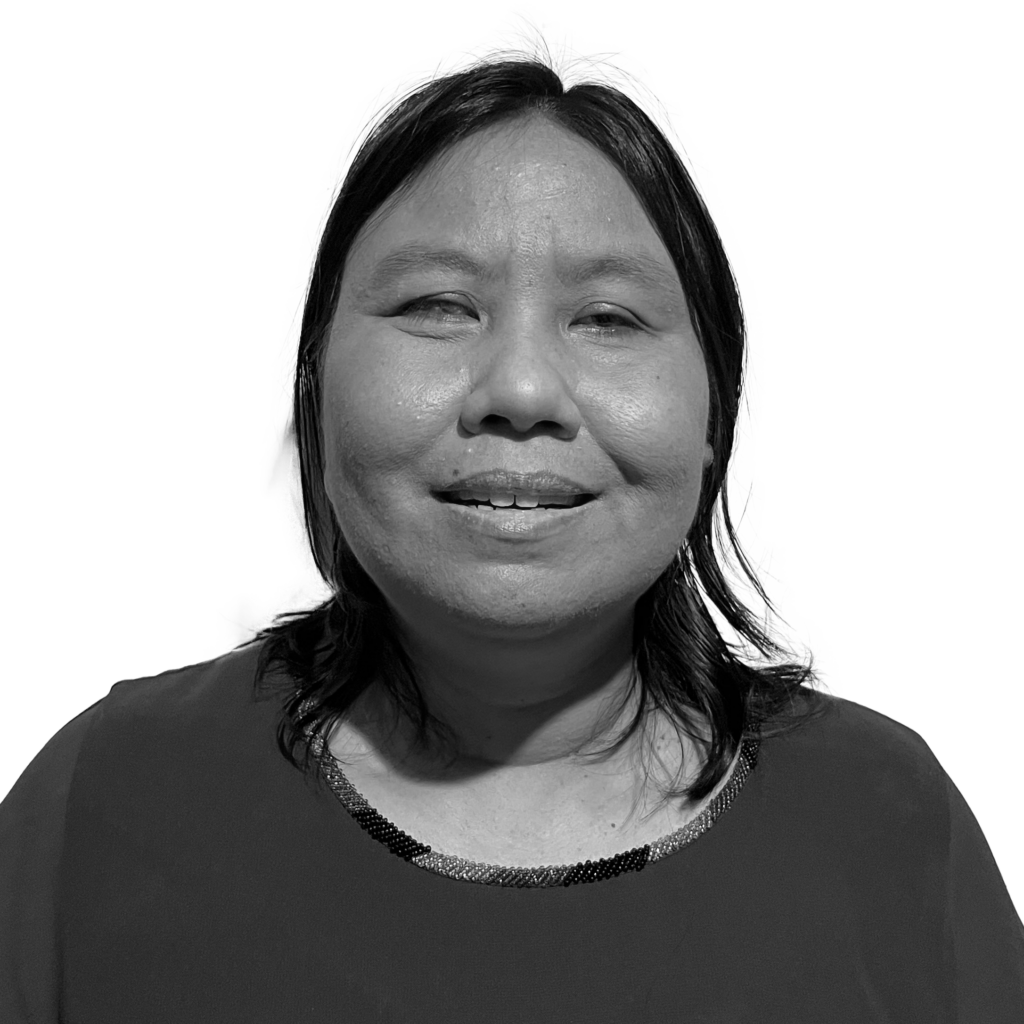
UGANDA: 2021 DJP Fellow Esther Suubi provides an intimate look at how Ugandan women with psychosocial disabilities unite against discrimination. *Audio descriptions for blind and low-vision audiences.
Filmmaker: Esther Suubi
Esther Suubi is an advocate for young girls and women's voices and a peer educator at Triumph Mental Health Support. Read more about Esther Suubi
Transcript for One Voice
The video starts with a black screen and soft piano music.
Fade to Gorret Namwanje, a young Ugandan woman and self-advocate at Triumph Mental Health. She wears an orange T-shirt, has braids in a ponytail, and sits in a blue plastic chair in a room. An informational poster hangs on a wall behind her.
Fade to Gorret Namwanje sitting in the room and speaking to the camera: “My name is Namwanje Gorret. I’m at advocate in Triumph Uganda Mental Health Support and Recovery Program. I’m having a psychosocial disability. I joined a vocational institute, and I’m also Guild president.”
Cut to Namulondo Irene, a Ugandan woman with a short afro wearing a purple dress. Namulondo is a teacher by profession and is now a cleaning lady. She sits in a blue plastic chair outside and speaks to the camera in Lagunda: “My name is Namulondo Irene. I am 38 years old. I do stay in Mbiko. I am a hard-working lady with a family and children.” Leaves are in the background.
Cut to Nambala Hilda Mpandi, a Ugandan woman with a pulled-backed hairstyle who wears an orange patterned dress. Mpandi, a mother and teacher of a nursery class, sits in a blue chair outside a brick building and speaks to the camera in Lagunda with hand gestures: “My name is Nambala Hilda Mpandi. I stay in Jinja, in a place called Musiima, and I have four children.”
Cut to Namwanje sitting in the room, “I studied and completed my senior year, and now I’m on a vocational institute, doing a course of hairdressing.”
Cut to Namwanje and a Ugandan woman wearing a headscarf. They both plait a young Ugandan woman’s hair in a room while two other Ugandan women sit on a bed on the left and observe. A third Ugandan woman sits on another bed in the background. Namwanje’s voiceover continues, “I’m able to cope up with the psychosocial disability.”
Cut to Namwanje speaking, “I left school because ever since I joined Triumph Uganda Mental Health Support and Recovery Program they have been giving me advice, counseling me, on how I could stay with a psychosocial disability.”
Cut to a slow-motion shot of Irene opening a door and stepping outside. She sits in a brown chair on a porch. Irene’s voiceover says, “First and foremost, I’m a teacher by profession. I taught years back before getting the mental health challenges that I have right now.”
Cut to Irene sitting outside, “It then became difficult for me to teach because the medicine I take would make me sleep. And yet I have children to teach, so I decided to stop teaching and started to work for an organization that deals with electricity.”
Cut to Mpandi sitting in a blue chair outside opposite another Ugandan woman at a table who wears an orange headscarf and a dark blue patterned dress. They both converse. Mpandi voiceover says, “I got this mental health challenge in 2004.”
Cut to Mpandi sitting outside and speaking with hand gestures, “I hadn’t yet started working as a teacher.”
Cut to a pull-out shot of Mpandi speaking to the woman at the table, Robinah Alambuya, founder of Triumph Mental Health. Mpandi’s voiceover continues, “My husband was working as a driver at Wairaka College and passed on in 2003. The workers at the college created for me the opportunity to work as a tea lady. And as I served the teachers, that is when I got a mental health challenge.”
Cut to Mpandi speaking with hand gestures.
Cut to Namwanje speaking, “Because at school I’m the only person having psychosocial disability I know how to control myself, what I should do, and what I should not because now I’ve taken a long time with it and I know the signs.” The piano music fades out.
Cut to Irene sitting in a brown chair, on a porch, with a plate of food. A Ugandan woman, wearing a blue dress with pink flowers and a blue headscarf, holds a plate of food and joins Irene on the left. Another Ugandan woman, who has a short afro and wears an orange-and-gray plaid shirt over a green dress, joins Irene on the right.
Cut to Irene speaking, “I work as a house cleaner. In case there are visitors that have come, I wash for them, mop, iron their clothes. That is it basically.”
Cut to a slow-motion shot of Namwanje walking outside with another Ugandan woman. The other woman has shoulder-length black hair, holds a white shoulder bag, and wears a black blazer over a multi-colored patterned dress. Namwanje’s voiceover says, “There is a day I was ill and I had not told my dormmates.” Birds chip off-camera.
Cut to Namwanje speaking with hand gestures, “That I’m having this psychosocial disability and I was not okay. Some just laughed at me as they thought they were ghosts. But after I told everyone about psychosocial disability others thought that it can be spread and they couldn’t come near me. And I explained to them everything about psychosocial disability since I had learned much from Triumph Uganda Mental Health Support and Recovery Program.”
Cut to a slow-motion shot of Mpandi walking toward a brick house with Alambuya and a rooster crowing off-camera. Mpandi’s voiceover says, “But I have challenges with my daughter, Adonai Jane Mpandi, who has challenges in her mental health.”
Cut to Mpandi speaking with hand gestures, “That because I went through such a phase, I try my best to help control some situations that she experiences.”
Cut to a slow-motion shot of Mpandi and Alambuya entering a brick house. Mpandi’s voiceover continues, “I usually encourage her to keep at home and not to talk too much, if possible.”
Cut to Mpandi speaking with hand gestures.
Cut to Irene speaking with hand gestures, “When I used to teach I faced a lot of challenges. I had to make the scheme of work, lesson plan daily, and also to deal with the children. Due to the medication, I would sleep. But when I changed the job, there was minimum supervision. I am not working with many people, so it is easier for me. When I arrive, I wash if there are clothes to be washed.” Guitar music plays in the background for the duration of the video.
Cut to a close-up shot of someone mopping hardwood floors. Irene’s voiceover continues, “Mop, then iron, and finally, head back home.”
Cut to a close-up shot of someone wearing an orange shirt and ironing a beige shirt on an ironing board.
Cut to a push-in shot of wooden desks and chairs in a classroom. Irene’s voiceover continues, “Where I worked as a teacher, every mistake that was made was always pinned on me.”
Cut to Irene speaking, “For example, if I was on duty with a colleague, they would leave all the work for me to do. And if I missed out on doing some of the work, I was reported and accused. In class, we were usually three teachers, but due to the sleeping issue, my other colleagues wouldn’t understand, so they would report me to the head teacher and he would complain as well as threaten to fire me. I would be on tension and even lose sleep due to the stress, making me want to go back to hospital and yet I am on medication.”
Cut to a push-in shot of Namwanje and a Ugandan woman plaiting a young Ugandan girl’s hair, surrounded by three other Ugandan women who observe. Two of the three women who watch the plaiting sit on a mattress and talk to each other. Someone off-camera, on the left, touches the head of the third woman on camera. Namwanje’s voiceover says, “When I got ill, it was a weekend. It was a Sunday. I was plaiting someone’s head, and we were like four hairdressers on it. It was the first month when I joined the school. I started plaiting. I told my friends, ‘I’m not okay. Please help me. Take me to my dormitory.’”
Cut to Namwanje speaking, “I fall down, knocked my head in the stone, I told them. Then I could talk. I was having some energy, and I wanted to even work. But another one, the one who was moving on a wheelchair, she’s the one who came to help me. The others, they were just laughing at me.”
Cut to a close-up shot of Mpandi speaking.
Cut to Mpandi speaking with hand gestures, “I gained the courage to speak up. I have a mom in Mbiko called Rachel Namuwaya. She encouraged me not to despise myself because this is almost like any other disease.”
Cut to Mpandi standing up from a blue chair at a table outside and hugging Alambuya. Mpandi’s voiceover continues, “Also Mum Robinah [Alambuya] gave me psychosocial support and say that I will still be able to work.”
Cut to Mpandi speaking with hand gestures, “Despite the mental health challenge. With time I was able to start up this school called Sitanist.”
Cut to images of swirling mathematical symbols, equations, and numbers on a blackboard.
Cut to a close-up shot of someone picking up white chalk and drawing a line on a blackboard surface. Mpandi’s voiceover continues, “I was in shock because I couldn’t believe that something good would come out of me.”
Cut to Mpandi speaking with hand gestures, “All thanks to my mothers.”
Cut to Namwanje speaking, “Another day, they told us to plait hair when the teacher was around. They started laughing at me, that that girl has epilepsy. Don’t be near her. When you jump on her urine, you will get the sickness.”
Cut to a close-up shot of Namwanje speaking, “It’s made me to start advocating.”
Cut to Namwanje speaking, “My fellow students here at school to know more about psychosocial disability.”
Cut to black text on a yellow screen that says, “‘If disability is one of the great human rights challenges of this century, then within this, psychosocial disability remains one of the most challenging and misunderstood areas of disability.’ – Paul Deany, DRF Program Officer.”
Cut to Mpandi speaking with hand gestures, “To all those that have mental disabilities or other disabilities should not be segregated because they are blessings. They should also not despise themselves but encourage each other and trust in the Lord and pray to him because he has the reason as to why they are the way they are. And he will use them to do whatever he wishes for them to do.”
Cut to a black screen.
Cut to black text with a yellow border on a black screen that says, “Made with support from the Disability Justice Project and the Disability Rights Fund.” The Disability Justice Project logo is a large yellow “D” with a black play button in the middle to signify video storytelling, and white text says “Disability Justice Project” on the bottom left. The Disability Rights Fund logo – a white box with black text that says, “Disability Rights Fund” – is on the bottom right of the screen.
Fade to a black screen.
The guitar music fades out.
About this video ‘Blind Persons Can Do Massage Therapy’
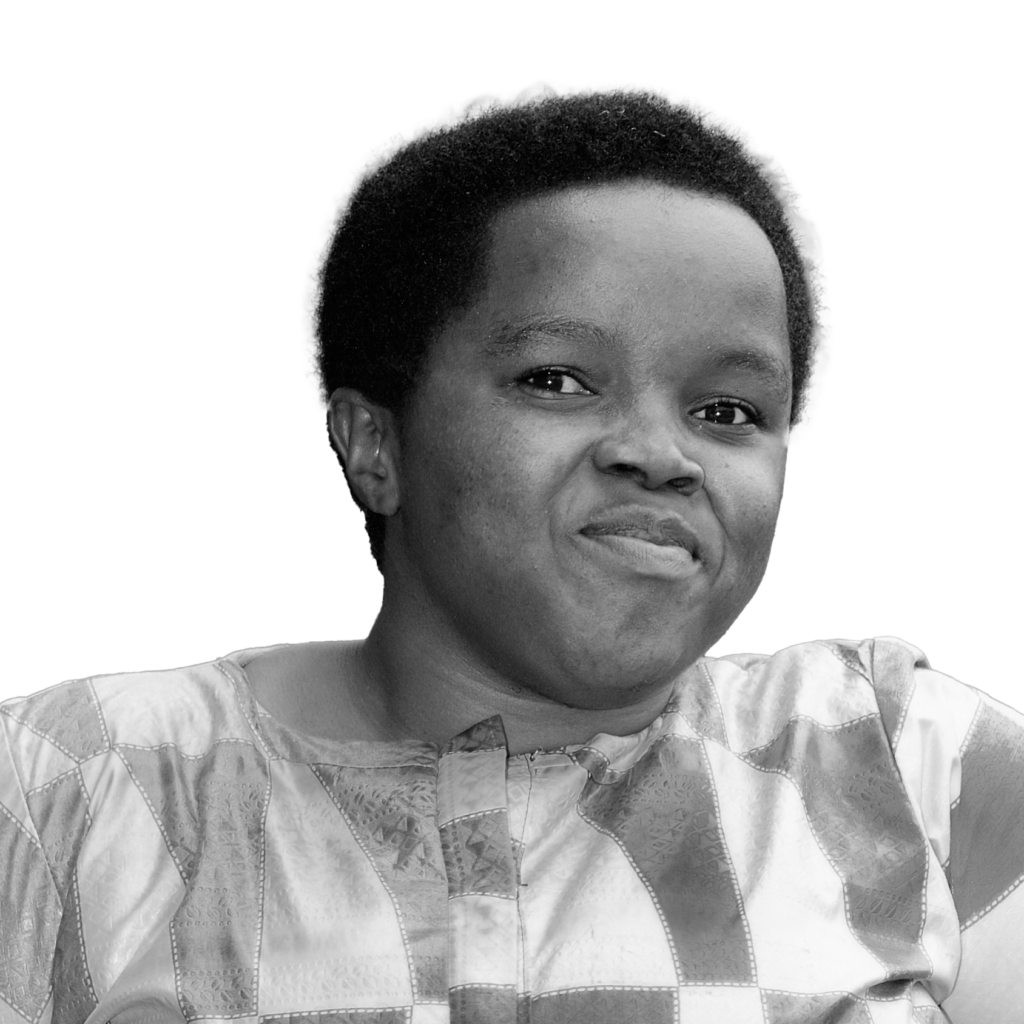
RWANDA: Beth Gatonye founded Seeing Hands Rwanda after noticing the high unemployment rate among Rwandans with disabilities. Her organization is working with participants to transition from training to employment.
Filmmaker: Esther Mukampogazi
Esther Mukampogazi is a project manager and advocacy coordinator at the Organization of Women with Disabilities for Health Promotion and Development in Rwanda (OWDHD). Read more about Esther Mukampogazi
Transcript for ‘Blind Persons Can Do Massage Therapy’
About this video Out of Their Hands
INDONESIA: The COVID-19 pandemic has exacerbated limited work opportunities for Indonesian massage therapists who are blind and low-vision. *Audio descriptions for blind and low-vision audiences.
Filmmaker: Mahretta Maha
Mahretta Maha is a disability rights activist living with blindness. She is a program officer at the Association for Disability Access Elections (PPUAD) for the National Coalition of Organizations with Disabilities. Read more about Mahretta Maha
Transcript for Out of Their Hands
The video starts with slow piano music.
Fade to black text on a yellow screen that says, “Due to limited education and employment opportunities, only half of all Indonesians with disabilities are employed.” On the bottom left of the screen, black text says, “Institute for Economic and Social Research | Faculty of Economics and Business, University of Indonesia.”
Fade to black text on the same yellow screen that says, “For Indonesians who are blind or low vision, the options are even more limited.”
Fade to Sadiah, an Indonesian woman wearing a green hijab, sitting on a gray couch and speaking to the camera in Bahasa Indonesia: “My name is Sadiah. I am visually impaired.”
Cut to pull-out shot of Sadiah kneeling and massaging the foot of a client who lays on a gray mattress on the floor.
Cut to a pull-out shot of Sadiah massaging the back of the client, who is an Indonesian man. Sadiah’s voiceover continues, “I am a housewife and work as a masseur. I only have a very simple place.”
Fade to black text on a yellow screen that says, “The tradition of blind masseurs in Indonesia has existed for centuries, but now these practitioners face heavy competition from larger massage parlors and spas.”
Fade to black text on a yellow screen that says, “COVID-19 has only intensified these inequities as customers worry about social distancing and prefer to book appointments online.”
Cut to a pull-out shot of a sign in Bahasa Indonesia advertising the Rohim Blind Massage Parlor.
Cut to Sadiah sitting in the room, “Before the pandemic, I had already experienced a decrease in income.”
Cut to a pull-out shot of a sign in Bahasa Indonesia advertising the Rohim Blind Massage Parlor. Sadiah’s voiceover continues, “For example, if in the past I could massage three or four patients in one day, for now, in one day or one week I can only get three patients, which is very lucky.”
Cut to Sadiah speaking, “Especially during the pandemic, in the past two years.”
Cut to the sun rising over a deserted commercial street. Some birds fly across the street and land on the left sidewalk.
Cut to Sadiah speaking, “We masseurs, especially me, really had no patients who wanted to visit or use my services or our services for blind masseurs.”
Cut to a close-up shot of an Indonesian man pressing buttons on a large speaker strapped to his chest while a song plays from the speakers. He stands in a room.
Cut to Sutoro, the man with the speaker, singing into a microphone hanging from a cord around his head. Sutoro has gray hair and wears a red-and-gold shirt. In Bahasa Indonesia, his voiceover says, “My name is Sutoro.”
Cut to a blue-and-white sign in Bahasa Indonesia advertising the Blind Massage Parlor Assisted by West Jakarta Social Sub-Department. Sutoro’s speakers play a song in the background.
Cut to Sutoro massaging a client’s leg as they lay on a multi-colored massage table. Sutoro’s voiceover continues, “And my profession is a masseur or doing massages.” Music playing from Sutoro’s speakers fades into emotional piano music.
Cut to Sutoro standing in front of a white wall and speaking to the camera: “But because of the situation and condition.”
Cut to Sutoro wearing sunglasses and using a white cane to walk on an edge of a busy street. A speaker is strapped to his chest, and several motorcyclists move by the street. Sutoro’s voiceover continues, “I ended up changing professions.”
Cut to Sutoro standing in the room, “Namely, in the morning I go to the market to carry out activities to become a street artist or busking.”
Cut to Sutoro singing into his microphone and adjusting his speaker in a room.
Cut to a photo of an Indonesian woman wearing a green hijab and carrying many bags of crackers along the side of a road. An Indonesian boy, wearing a camouflage baseball cap, walks with her on the left. Cars and motorcyclists move by the road. Sutoro’s voiceover continues, “In the afternoon, I sell crackers around.”
Cut to a push-in shot of Sutoro massaging a client’s leg on a multi-colored massage table. His voiceover continues, “Because the massage profession is not sufficient for daily needs.”
Cut to a masseuse who is an Indonesian woman with black hair in a pulled-back hairstyle. She massages a white woman’s legs on a luxurious massage table overlooking the ocean. The client smiles as she receives her massage.
Cut to a close-up shot of a masseuse massaging a client’s feet. Sutoro’s voiceover continues, “Because now there are lots of sighted people doing massages.”
Cut to Sutoro speaking, “And now there are lots of massage places whose places are more luxurious because they have money.”
Cut to the Indonesian woman massaging another client’s back on a massage table. The client is a white woman wearing a bikini. The sun sets over trees and a bungalow in the background. Sutoro’s voiceover continues, “So the massage profession of the blind is eliminated.”
Cut to a push-in shot of a busy market in Jakarta and motorcyclists parked by the market stalls. Two identical high-rise buildings are in the background. Sutoro’s voiceover continues, “So I was forced to switch professions.”
Cut to Sutoro speaking, “Being a street artist is actually quite a challenge.”
Cut to several pedestrians and motorcyclists brushing past a busker, who is blind, in a busy market. The busker, an Indonesian man with short graying hair, holds a white cane. A microphone whose cord is around his neck, and a speaker is strapped to his chest. Motorcyclists honk and pedestrians speak in the background. Sutoro’s voiceover continues, “In the market, the barriers are clearly the passing of motorbikes.”
Cut to Sutoro speaking, “So we have to be really careful because there are quite a lot of motorbikes pacing back and forth.”
Cut to the busker, who is blind, in the crowded market.
Cut to a cracker seller, an Indonesian woman wearing a beige hijab, sitting on the side of a busy road with many bags of crackers. The seller eats out of one of the bags. An Indonesian girl with long black hair sits next to the woman while a cyclist and motorcyclist move by on the street.
Cut to another cracker seller, an Indonesian woman with black hair in a pulled-back hairstyle, sitting on the side of a busy road. Several cracker bags hang on a brown stick in front of her, and several motorcyclists move by the street. Sutoro’s voiceover continues, “When selling crackers, it’s not only blind people who sell them, now even sighted people sell them.”
Cut to the second cracker seller sitting on the side of a busy road at night. Cars and motorcyclists move by the street. Sutoro’s voiceover continues, “So it’s getting lonely, and I often throw them away because they don’t sell.”
Cut to Sutoro speaking, “So the crackers end up being wasted.”
Cut to a busker, an Indonesian man with short black hair, singing into a microphone from a curb at night and holding a white cane. Motorcyclists move by the street, and traffic noises are in the background.
Cut to Eka Setiawan, a middle-aged Indonesian man with short black hair. Setiawan wears a gray shirt, sits in front of a yellow wall, and speaks to the camera in Bahasa Indonesia: “I am Eka Setiawan.”
Cut to Setiawan wearing a white prayer cap, white earbuds, and speaking through a PA system at a large meeting. Most women at the meeting wear black hijabs, and most men have short black hair. One woman has black hair, and one man wears a blue-and-white prayer cap. All the meeting attendees wear face masks. Setiawan’s voiceover continues, “I am a blind activist who fights for the rights of people with disabilities.”
Cut to Setiawan standing in front of the yellow wall, “Since Indonesia ratified the UNCRPD in 2011 with Law 19 of 2011 which then domesticated the Law on Persons with Disabilities, Indonesia issued a disability law in 2016.”
Cut to a screenshot of black text on a white screen that says, “PRESIDENT OF THE REPUBLIC OF INDONESIA | LAW OF THE REPUBLIC OF INDONESIA NUMBER 8 OF 2016 CONCERNING PERSONS WITH DISABILITIES,” in Bahasa Indonesia.
Cut to Setiawan speaking, “Until today, the existing conditions still make it difficult for people with disabilities.”
Cut to a busker, an Indonesian man wearing a black baseball cap. The man sings into a microphone whose cord is around his neck, and a speaker is strapped to his chest. He walks from car to car on a busy road, and traffic noises are in the background. Setiawan’s voiceover continues, “Especially the visually impaired, to carry out their profession.”
Cut to Sadiah massaging a client’s leg on a gray mattress.
Cut to Setiawan speaking, “And incidentally most of the visually impaired still work as masseurs.”
Fade to black text on a yellow screen that says, “In South Korea, only people who are legally blind are allowed to become professional masseurs.”
Fade to black text on a yellow screen that says, “Indonesian activists have advocated for a similar law in their country to protect the livelihoods of those who are blind or low vision.”
Cut to Setiawan speaking, “In the current situation, the profession of a masseur for the blind does not seem to be a promising profession.”
Cut to a close-up shot of Sutoro massaging a client’s leg on a multi-colored massage table.
Cut to pull-out shot of a white towel on a fancy massage table in a massage parlor. Tiny green lights line one section of the floor in front of the massage table.
Cut to Setiawan speaking, “The massage profession has been cultivated by many non-disabled people whose packaging can certainly be much better and with much stronger capital, putting blind friends into the massage profession.”
Cut to a busker, an Indonesian man with black hair in a pulled-back hairstyle, singing into a microphone on a busy street at a market. Pedestrians and motorcyclists move by him, and music plays from a speaker.
Cut to an Indonesian woman, wearing a beige hijab, stopping to give money to a busker at a busy market. The busker, an Indonesian man, wears a blue cap and uses a white cane. A motorcyclist passes closely by the busker, and some people at the market wear face masks. Setiawan’s voiceover speaking, “Inevitably, blind friends change professions.”
Cut to Setiawan speaking, “I am sure that blind friends understand that the work they do is risky work.”
Cut to an Indonesian woman wearing a brown hijab and holding a white cane on a busy street. She sings into a microphone whose cord is around her neck, and a speaker is strapped to her chest. Setiawan’s voiceover continues, “But there are not many professional choices that can be made by blind friends. The advocacy needs to be continued.”
Cut to Setiawan speaking, “The hope that can be conveyed to all parties is that opportunities for friends with disabilities or blind people as masseurs must indeed be opened as widely as possible.”
Cut to an Indonesian woman wearing a white hijab. She stops a busker, an Indonesian man with black hair in a pulled-back hairstyle, to put money in his bag at a busy market. Music plays from a speaker.
Cut to Setiawan speaking, “And can actually be managed better. For example, in the world of tourism, the world of hospitality.”
Cut to an aerial shot of a luxury hotel in Indonesia. A large pool and trees surround the hotel.
Cut to Eka speaking, “So that blind people have better opportunities in their profession as masseurs.”
Fade to black text with a yellow border on a black screen that says, “Copyright – @2022 PPUA Disabilitas. All rights reserved.”
Fade to black text with a yellow border on a black screen that says, “Made with support from the Disability Justice Project and Disability Rights Fund.” The Disability Justice Project logo is a large yellow “D” with a black play button in the middle to signify video storytelling, and white text says “Disability Justice Project” on the bottom left. The Disability Rights Fund logo – a white box with black text that says, “Disability Rights Fund” – is on the bottom right of the screen.
The emotional piano music fades out.
About this video A ‘Bitter Pill’
INDONESIA: Lily Puspitasari and Nurhayati Ratna Sari Dewi, two Indonesian women with psychosocial disabilities, speak out against workplace discrimination. *Audio descriptions for blind and low-vision audiences.
Filmmaker: Kinanty Andini
Kinanty Andini is a freelance graphic design and digital artist. She is affiliated with the Indonesia Mental Health Association (IMHA), also known as the Association of Healthy Souls. Read more about Kinanty Andini
Transcript for A ‘Bitter Pill’
The video starts with a piano instrumental and a video of cyclists, vehicles, and pedestrians moving by a street in Jakarta, Indonesia. High-rise buildings are in the background.
Fade to a timelapse of vehicles moving by a traffic-packed, tree-lined street in Jakarta. High-rise buildings are in the background. An Indonesian woman’s voiceover in Bahasa Indonesia says, “I used to work in a company in Jakarta. In 2012 I was fired because I was discovered as a person with a mental disability.”
Cut to the person behind the voiceover – Nurhayati Ratna Sari Dewi, an Indonesian woman wearing a yellow hijab. She is the head of the Indonesian Mental Health Association (IMHA)’s branch in Jakarta. Dewi sits outside and speaks to the camera: “I have worked for 20 years at my job. But at that time I had a bitter experience that I was discovered to have bipolar disorder. And then, I was dismissed.” Several plants and an exterior stairway are behind her.
Cut to Dewi working on a laptop in an office. She looks up to speak to someone off-camera. A long desk with office items is behind her.
Cut to Dewi speaking outside, “When I first started working, everything was normal. I started experiencing mental disability around 1997 when I was 18 years old. At that time, my condition was still mild, so I didn’t need to go to the doctor every month.”
Cut to Dewi sitting at a table outside. She is wearing glasses and a purple hijab. She speaks to a co-worker, who is wearing a white hijab on the left, and another person who is off-camera.
Cut to Dewi speaking, “I had a relapse in 2011 when I experienced baby blues postpartum. I did not know that this disease (Bipolar Disorder) should have regular treatment at the doctor every month.”
Cut to Dewi looking over a document with a co-worker in the office. Her co-worker, seated to the left, runs through the document with a pen. A laptop is in front of Dewi. Dewi is wearing a beige hijab, and her co-worker is wearing a white hijab. Another co-worker, wearing a black hijab, sits at the long desk in the background. Dewi’s voiceover continues, “I relapsed again in 2012. When I relapsed in 2011, I didn’t tell my boss that I was going to a psychiatrist.”
Cut to Dewi speaking, “And then when I went to a psychiatrist and it was discovered by the company’s doctor that I have bipolar disorder, eventually the stigma develops.”
Cut to Dewi speaking on a cell phone. She sits on a blue-and-white chair and leans against a white wall.
Cut to Dewi speaking, “At that time, I accepted that fact because the stigma of a person with a mental disability or mental illness was very negative.”
Cut to a pan shot of Dewi and two co-workers working on laptops in an office. A woman is seated on the left, Dewi is in the middle, and a man wearing glasses is on the right. Dewi’s voiceover continues, “If I get caught, I’ll be laid off just like that, so I just took that bitter pill.”
Cut to Dewi looking through documents in the office. A man stands behind her. Dewi’s voiceover continues, “At the same time, my co-worker was suffering from chronic kidney disease.”
Cut to Dewi speaking, “Which means he and I both have a chronic disease, a long-term disease. But back then I was fired, whereas he wasn’t fired. I find this very unfair.”
Cut to Dewi listening and taking notes in a notebook as someone off-camera speaks to her. Dewi sits outside with another person. She is wearing a black hijab, black glasses, and a multi-colored face mask.
Cut to Dewi speaking, “The disadvantage for person with mental disability at that time, is that we were not given reasonable accommodation, for example, a sick leave for us to rest. Instead, they judge us immediately. The disadvantage is that the stigma and discrimination against us is very unfair.”
Cut to Dewi and the two co-workers working on laptops in an office. The man removes an earbud and speaks to Dewi and the other co-worker. Dewi’s voiceover continues, “We were not given the opportunity to work, so it’s very detrimental for us.”
Cut to Dewi speaking, “But now there is law number 8 of 2016 where a person with disabilities cannot be fired for reasons of disability.”
Cut to a green-and-purple informational sign about the Indonesian Mental Health Association in Bahasa Indonesia. One forearm crutch is next to the informational sign.
Cut to Dewi speaking, “The solution for people with mental disability in general is actually reasonable accommodation, those adjustments. For example, we people with mental disability have to go to a psychiatrist every month, so what we hope from the company or the government, which will make government regulations reasonable accommodations.”
Cut to a close-up shot of an Indonesian woman’s hands as she works on a laptop. The woman is wearing a white hijab, and plants are in the background.
Cut to Dewi speaking, “Is that they will allow us to see a psychiatrist for regular check-up once a month without any leave deductions. Second, we hope that they will give us time to rest when we are sick, don’t fire us.”
Cut to an Indonesian woman wearing a light pink hijab and suit. She walks to a window, takes a deep breath, and smiles. A shelf with plants is in the background. Dewi’s voiceover continues, “Third, provide us a quiet room to relax when we’re burned out or when we need some time to rest.”
Cut to Dewi speaking, “Fourth, give us worktime flexibility, because sometimes it’s hard for us to fall asleep at night. Also, allow us to come late or allow us to do our work from home because the important thing now is that we get our work done.”
Fade to two office workers looking over financial documents with pens. In front of them, a laptop and a computer are on a table. An Indonesian woman’s voiceover in Bahasa Indonesia says, “I used to work in a hotel in Bandung as accounting staff.” The piano instrumental from the start of the video transitions to another piano instrumental.
Cut to the person behind the voiceover – Lily Puspitasari, a young Indonesian woman with long black hair. She is wearing black glasses, sitting in a room, and speaking to the camera: “My co-workers didn’t distinguish their attitude toward me because my illness had not been discovered at the time. But later, I attached a letter from a psychiatrist, that’s why my illness was discovered.”
Cut to a close-up shot of an Indonesian person opening a letter at a desk. A laptop, pen, and notebook are on the desk.
Cut to Pupsitasari speaking, “It was my own initiative because I skipped work for 2 days.”
Cut to a close-up shot of Puspitasari speaking, “Their response was very different from what I expected. Because I was expecting them to understand why I skipped 2 days of work.”
Cut to Puspitasari stepping through a brown door.
Cut to Puspitasari speaking, “But then, I didn’t get a first warning letter nor a second warning letter, but I was fired the next day after I attached the letter from my psychiatrist.”
Cut to Puspitasari sitting outside and flipping through a magazine. Her voiceover continues, “In my opinion, they should have given me a chance to explain why I attached the letter.”
Cut to Puspitasari speaking.
Cut to an Indonesian woman looking upset. She is frowning, and her hands are on her temples. The woman’s black hair is in a pulled-back hairstyle. She sits at a desk, and on the right, a small cardboard box contains binders and other office items. A co-worker walks up to her and pats her shoulders to console her.
Cut to Puspitasari speaking, “They shouldn’t have fired me immediately and the government should have given us reasonable accommodations, so that I can feel like there’s a second chance to work. For example, a quiet room when we’re stressed or if we feel our productivity is low.”
Cut to plants, a table, and two chairs on a skyscraper balcony. Other skyscrapers are in the background.
Cut to Puspitasari speaking, “Work can also be done from home.”
Cut to a close-up shot of an Indonesian person’s hands working on a laptop at a desk. A stack of books is on the desk. Puspitasari’s voiceover continues, “Because psychiatric medicine sometimes makes it hard for us to wake up in the morning.”
Cut to Puspitasari picking up a drink next to a kitchen stove and taking a sip. The kitchen’s counters are full of cooking ingredients and cooking tools. Her voiceover continues, “So it would be better if the usual worktime started at 8AM and finished at 5PM, shifted to start at 10AM and finish at 7PM. It’s fine in my opinion.”
Cut to a young Indonesian woman wearing a beige hijab. She is working at a computer in an office with two co-workers. All the workers are wearing blue shirts.
Cut to Puspitasari speaking, “Society should not treat us differently because we are the same human beings who have many shortcomings. So it’s better not to discriminate us because it will make us feel down.”
Fade to black text with a yellow border on a black screen that says, “Copyright – @2022 IMHA. All rights reserved.”
Fade to black text with a yellow border on a black screen that says, “Made with support from the Disability Justice Project and Disability Rights Fund.” The Disability Justice Project logo is a large yellow “D” with a black play button in the middle to signify video storytelling, and white text says “Disability Justice Project” on the bottom left. The Disability Rights Fund logo – a white box with black text that says, “Disability Rights Fund” – is on the bottom right of the screen.