News
From Isolation to Advocacy
Play audio version
Nigeria’s DeafBlind Community Organizes for Change
March 11, 2025
NIGERIA — The fact that the first officially recognized association for the DeafBlind in Nigeria, Deaf-Blind Inclusive and Advocacy Network, Nigeria, was only formally launched in October 2024 speaks volumes about how long DeafBlind individuals in this country have gone without proper recognition and support.
Solomon Okelola is the founder and executive director of Lionheart Ability Leaders International Foundation, which works to educate people, from government officials to teachers, about Usher syndrome, a condition that causes DeafBlindness. “Before we [Lionheart] started work in 2019, advocacy was just for individuals with deafness,” says Okelola, who is DeafBlind. “There was very little known about individuals with DeafBlindness. You never heard about them in special education or disability affairs. People never knew there was anything like DeafBlindness…”
Thanks to Okelola’s relentless advocacy, there’s now an association of the DeafBlind in Nigeria. As president of the newly formed Deaf-Blind Inclusive and Advocacy Network, Solomon talks about the why of the association: “The association was started for the specific purpose of making sure persons with DeafBlindness are included in special education and all disability affairs, with the aim of making provision for [their] needs.”
Unique Disability, Unique Challenges
A 2018 report by the World Federation of the DeafBlind (WFDB) says the number of persons with Deafblindness is between 0.2 percent and 2 percent of the global population. This roughly translates to some 160 million people. The report also notes that in many countries (including Nigeria until very recently), DeafBlindness is not seen as a distinct disability. Instead, people who are DeafBlind are classified under broader disability categories such as “Deaf,” “blind,” or “multiple disabilities.” What this means is that persons with DeafBlindness are often not captured in disability data. In Nigeria, there’s still no reliable estimate of the DeafBlind population.
The hidden, less well-known nature of DeafBlindness makes it a unique disability with unique challenges. The WFDB report identifies some of these – isolation and exclusion (when support needs are not met), difficulties communicating and being understood (especially in the absence of tactile sign language), stigma and misconceptions (coming from a lack of understanding about their disability).
People who are DeafBlind have a combination of vision and hearing loss but are not necessarily completely blind or Deaf. They use various forms of communication, including spoken language, sign language interpretation (SLI), and tactile sign language. Tactile sign language involves signing (including fingerspelling) on the palms and body parts of the DeafBlind person to convey information.
A DeafBlind Bible Translator
I met John Shodiya, a DeafBlind man, in May/June 2023 during a two-week training for volunteer translators working to bring the Bible into local sign language for Deaf communities in Nigeria.
My initial reaction was to wonder what he could contribute to the translation work. At first, even the facilitators seemed skeptical about having John on the team. “What can he do?” they asked the team lead. But John became the most prolific member of the Deaf volunteers, thanks to tactile signage.
When I met John, I had no knowledge of tactile signage, although I could sign. I was hesitant to approach him for a proper introduction, doubtful of my ability to communicate with him. However, I summoned the courage, and fortunately for me, my previous knowledge of sign language helped as I learned tactile signage then and there. That move marked the start of one of the closest-knit friendships I have ever made within the disability community.
DeafBlindness, much like deafness, is characterized by a continuum. The timing of the onset of one or both sensory disabilities significantly influences an individual’s experiences. Those who acquire dual sensory disabilities later in life often have a reservoir of previous knowledge and skills to draw on as they adapt to their new lives. During the training, John demonstrated a strong memory of scripture passages and near-perfect translations. I soon learned that this ability dates back to his Christian background before he lost his sight. And it is that reservoir of “previous knowledge and skills” that this DeafBlind man drew on to churn out the best performance among the bible translators during those times he led the Bible translation team in worship.
Social isolation seems by far the most devastating of the challenges of living with DeafBlindness. Deaf within a year of birth, John attended schools and churches for the Deaf from childhood. Blessed with a towering physique and an amiable personality, he was recognized within the Deaf community and served as a leader in a congregation of Deaf Christians while in college. Then somewhere down-road, John began to experience vision problems. “The first signs of failing sight began during my time at the Federal College of Education, Oyo,” he recalls. The deterioration was slow, but eventually, failing sight culminated in blindness. John describes his initial reaction to the DeafBlind reality: “Living with deafness is a formidable challenge enough. To become DeafBlind was heart-rending. I slipped into loneliness and grief. My biggest challenge then was connecting with family, friends, and loved ones through receptive communication. I became depressed, sad, and sorrowful.”
John adapted over time to his new status through tactile communication. But tactile communication doesn’t solve all the problems. This is one of the insights from the close-knit bonding John and I developed during those first two weeks of training and subsequent meetings. For example, John goes through considerable emotional strain having to wait for help before he can access hordes of unread chats/text messages that regularly pile up in his inbox. (Some of these are sensitive, requiring an urgent response.) John’s wife, Ganiyat, who regularly helps him with these tasks, is often caught up in other things, and help often arrives late, sometimes too late! The consequences of not being able to readily access information are far-reaching. Opportunities are missed, and useful friendships and associations aren’t made.
Dilemma of Belonging
A recurrent question pops up as I relate with John – an issue of belonging. While he had sight, John found his place and sense of belonging in the Deaf community. Sadly, that sense of belonging was weakened when he became DeafBlind. In sharp contrast, the newly formed DeafBlind association has welcomed him with open arms. He is one of the executives.
With the formation of a DeafBlind association last year, I sought John’s perspectives. While he welcomes the move and declares readiness to work for its success, John says, “the Deafblind will certainly need assistance from seeing/hearing guides to move around, make calls, act as interpreters, fill documents, and so on.” Drawing from his Deaf culture background, John further highlights the advantages of the DeafBlind association in enlisting a few Deaf folks to help with communication/information acquisition, mobility, etc. One such advantage is the natural flow of communication and the stronger sense of bonding that comes with the shared Deaf experience.
Deaf-Blind Inclusive and Advocacy Network – Hope on the Horizon
For a disability cluster in the early stages of building community in a society still mostly unaware of DeafBlindness, the Deaf-Blind Inclusive and Advocacy Network gives a feeling of hope for the future. For example, in Lagos alone, Okelola says there are some 50 registered association members – with a handful of others scattered across other states.“We will reach out to these members in other states soon,” he says.
But there are challenges, and foremost among these is funding. As Okelola says: “So far, the association has not been able to achieve much on its own due to lack of sponsorship…”
Clearly, the issue of getting funding and partners will determine much of the future trajectory of the association. Then, there’s the issue of what operational model will best fit the newly formed DeafBlind association. There’s a need to look beyond advocacy drives to adopting models that commit to investing in independent living, social participation, and general well-being for DeafBlind individuals. The Nigerian situation calls for, amongst other things, a provision of specialized educational/rehabilitation facilities for people who are DeafBlind, the training of professional teachers/caregivers, and employment options.
The German Model – A Blueprint for Nigeria?
While writing this article, I had reason to discuss the DeafBlind experience with Anja Werner, a Deaf history scholar who happens to have an interest in DeafBlindness, too. She tells about the German Deafblind Association, which operates a specialist model – a facility in Hanover, Germany, that serves as the country’s center for DeafBlind education. This facility, Hearing – Seeing – Communication Education Center, provides early intervention, kindergarten, rehabilitation, etc., with live-in and work options. DeafBlind children are educated, and adults get professional training. They have educators to assist them. The mission? Providing support to DeafBlind people to ensure their disability does not lead to isolation.
Going forward, a model like this cuts an excellent blueprint for the Nigerian association.
Alexander Ogheneruemu is a Deaf writer, special educator, and disability advocate. A team member with the Voice for the Deaf Foundation (VDF), a Deaf-centric non-profit, his works are driven by a passion for changes that lead to better conditions for disabled and marginalized people.
Editing assistance by Jody Santos
News From the Global Frontlines of Disability Justice
‘We Only Ask to Be Noticed’
“I woke up choked and suffocated inside my locked room,” says Nur Hamda, “smelling burnt timber, with my eyes stinging, even while closed.” Smoke from Indonesia’s wildfires is seeping into homes, keeping people from work, and making it difficult to breathe. For Indonesians with disabilities, inaccessible warnings, unsafe evacuation routes, and limited healthcare make the crisis even harder to navigate. Now, disabled advocates are asking why their needs continue to be overlooked.
Not Accessible For Me
In Nigeria, children and adults with spina bifida and hydrocephalus continue to face discrimination, inaccessible schools, unaffordable healthcare and barriers to public transportation. Despite legal protections, many are still denied basic rights, leaving families to shoulder the financial and emotional costs. More than two years after a deadline for public institutions to become accessible, the gap between what the law promises and what disabled Nigerians experience remains wide.
Reducing the Disability Tax
Indonesia has adopted a new regulation aimed at reducing the extra costs disabled people face, guaranteeing discounts across nine sectors, including health care, transportation and assistive devices. But disabled Indonesians say fees and administrative hurdles involved in obtaining the documents needed to access those rights could leave some people behind. As the government begins implementing the policy, advocates are calling for disability assessments to be free and accessible.
Joy As Resistance
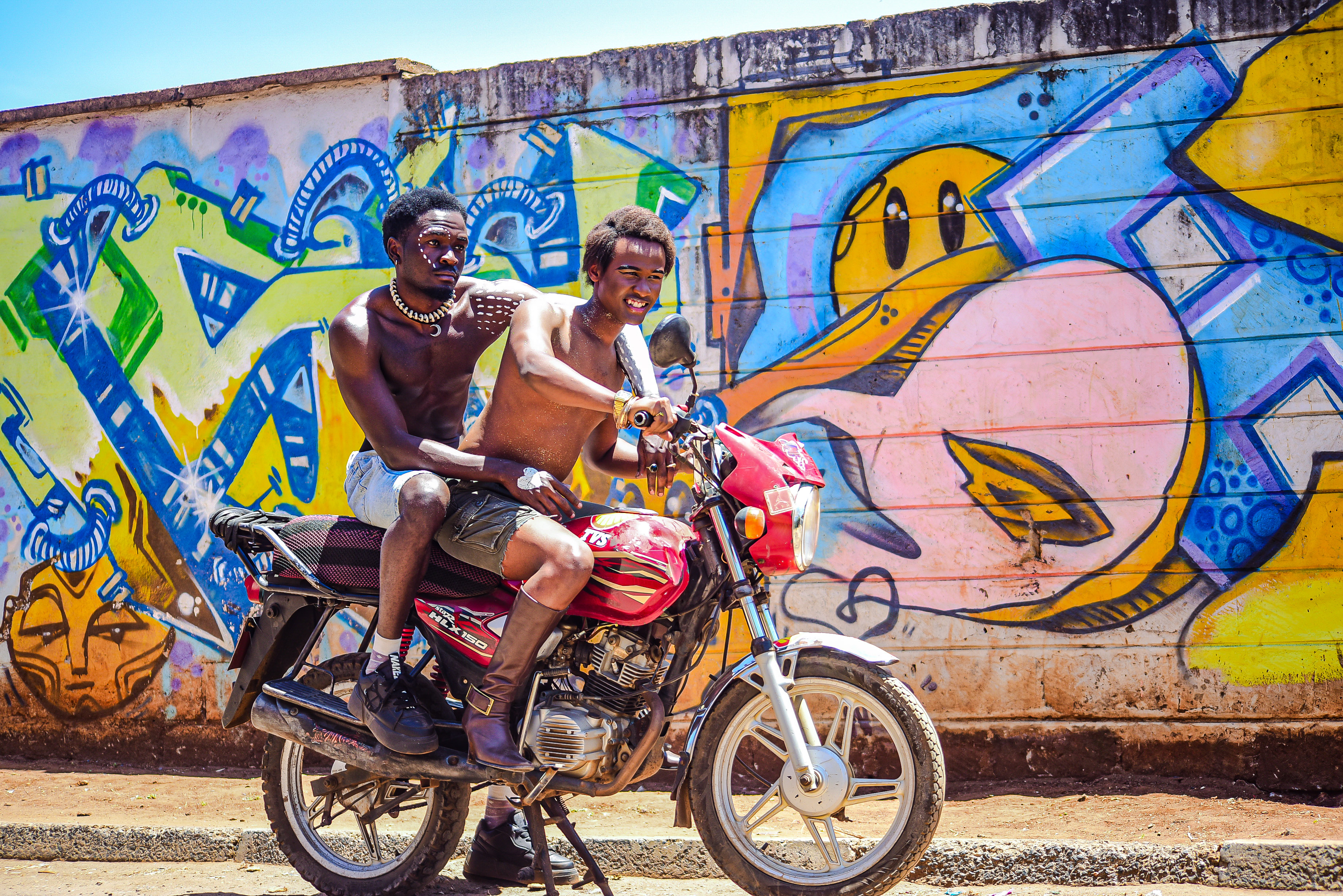
In Kenya, queer and disabled people are finding common ground around questions of identity, access, family, and belonging. Ahead of a Nairobi event exploring where disability and queerness intersect, organizers and participants talk about the communities they have found and the spaces they are trying to create. “Queer people and disabled people share way more than they think they do,” says one organizer. The event will use storytelling, art, performance, and what its organizers call “queer joy” to start a conversation they say is long overdue.
The Politics of Waiting, Wanting, and Hoping
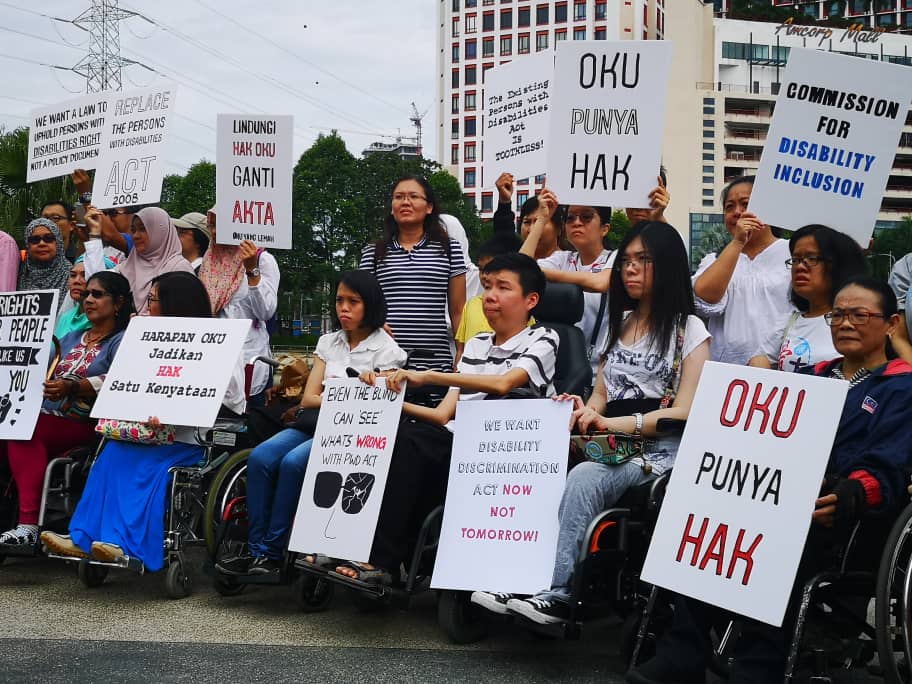
In Malaysia, disability exclusion is rarely one dramatic denial. More often, writes Beatrice Leong, it is “a series of ordinary delays” — inaccessible schools, symbolic consultations, policies without enforcement, and a system that asks disabled people to wait patiently for dignity and belonging. Blending personal reflection with political analysis, Leong examines what happens when inclusion is promised repeatedly, but justice never fully arrives.
Read more about The Politics of Waiting, Wanting, and Hoping
Beyond the ADA
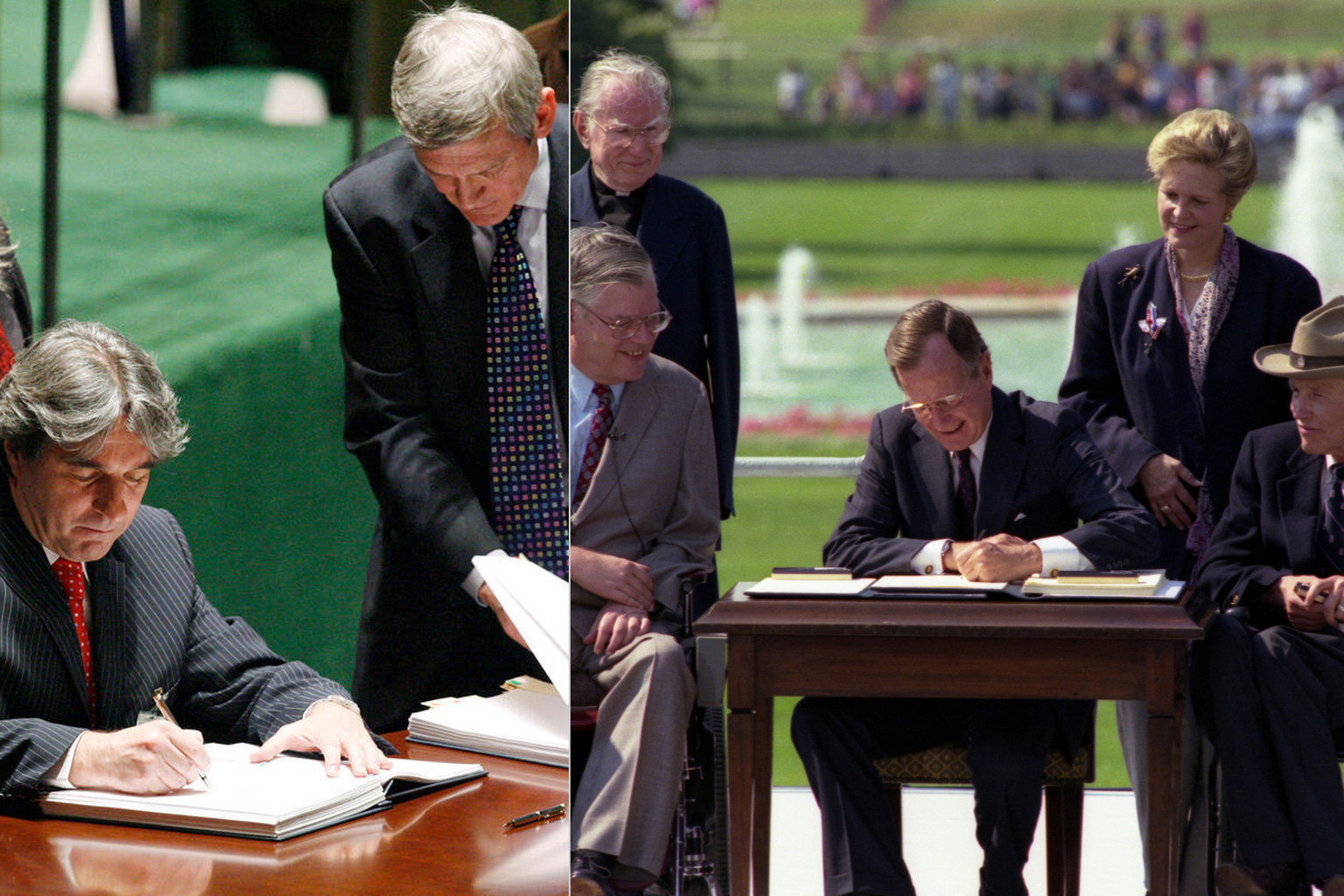
The ADA’s influence extends far beyond the United States. It helped shape a growing international approach to disability rights that eventually contributed to the development of the CRPD. But global disability movements have also expanded on ideas that U.S. law has yet to fully embrace. “I think many U.S. disability rights activists were surprised to find out how much we could learn from the international community,” says Eric Rosenthal, founder and executive director of Disability Rights International.